
A first helicopter tour follows a predictable sequence: check-in, a short safety briefing, a gentle lift-off, a smooth low-altitude cruise with guided commentary through your headset, and a controlled landing. Most flights last from a short to a moderate duration typically under an hour, and the sensations that surprise first-timers most (a quick push at takeoff, then a surprisingly steady ride) fade within the first minute.
TL;DR:
- Passengers are weighed before boarding to ensure safe seating, but the main factor is accurate weight distribution, not judgment.
- Weather conditions like fog, high winds, or low clouds can delay or cancel flights, and reputable operators prioritize safety over schedule.
- The safety briefing covers essential procedures such as seatbelt use, door operation, and emergency exits, which are critical for handling different scenarios.
- Good photo opportunities depend on camera stability, window angle, and booking a window seat, especially for doors-off flights that have stricter safety rules.
- Booking through verified platforms ensures safety and transparency by focusing on FAA certification, traveler reviews, and clear pricing, rather than marketing claims.
Table of Contents
- What to Expect Before a Helicopter Tour: Arrival, ID, and Packing
- The Safety Briefing: What Crews Actually Cover
- Boarding and Takeoff: What Happens and What It Feels Like
- In-Flight Sensations: Turns, Hover, and Staying Comfortable
- Getting Great Photos Without Breaking the Rules
- Landing and What Happens Once You’re Back on the Ground
- How Helicopterstour Verifies Operators Before Listing Them
- A First Flight, From Nervous to Grinning
- Ready to Book? How Helicopterstour Helps You Choose With Confidence
- Sources
- FAQ
What to Expect Before a Helicopter Tour: Arrival, ID, and Packing
Getting the logistics right before you even see the aircraft removes most of the anxiety around a first flight. Operators typically ask passengers to arrive some minutes before departure to handle check-in, ID verification, and paperwork.
- Bring a valid photo ID and your booking confirmation (printed or on your phone).
- Dress in layers since helicopter cabins run cooler than expected at altitude, and skip loose hats, scarves, or anything that could blow off in rotor wash.
- Wear closed-toe shoes and use a wrist strap or neck strap for cameras and phones.
- Expect to step on a scale before boarding. Many tour operators weigh passengers to calculate correct weight and balance for safe seating assignments, not to judge anyone.
Weather is the biggest wildcard. Helicopter tours depend on weather conditions, and low cloud, fog, or high wind can delay or cancel flights. Reputable operators reschedule or refund rather than fly in unsafe conditions, so a same-day delay is normal, not a red flag.
The Safety Briefing: What Crews Actually Cover
Every reputable operator runs through a standardized safety briefing before boarding, and it typically takes less than five minutes. Skipping it or tuning it out is the biggest mistake a first-time flyer can make, since the instructions directly affect how you handle doors, exits, and headsets once you’re airborne.
- How to buckle and check your seatbelt, plus when it must stay fastened
- Headset use, including the microphone and how to hear pilot commentary
- Door operation, or the specific harness rules if you’ve booked a doors-off flight
- Emergency exit locations and the brace position, if ever needed
Crews cover seatbelts, headsets, and boarding procedure on nearly every commercial tour, which is one reason the industry’s safety record for guided sightseeing flights stays strong. Before you book, check that the operator lists FAA certification, verifiable pilot flight hours, and recent maintenance logs. Those three details, combined with a healthy volume of traveler reviews, tell you far more about safety than the marketing photos on a tour page.
Boarding and Takeoff: What Happens and What It Feels Like
Boarding runs faster than most people expect, and it helps to know the sequence in advance.
- A crew member guides you to your assigned seat based on the weigh-in and cabin balance.
- Small bags usually go under the seat or in a designated pouch. Loose items stay zipped up.
- Crew close and check every door, then hand out headsets once everyone is seated.
- The pilot runs pre-start checks, and you’ll feel the rotors spin up as vibration builds through the cabin floor.
- At lift-off, you may feel a light push and a slight forward tilt as the aircraft climbs, settling into level cruise soon after.
Seat choice matters more than most first-timers assume. Seat choice affects your view and experience: front seats offer wider views and less noise, middle seats are often steadier, and window side seats are good for photography.
In-Flight Sensations: Turns, Hover, and Staying Comfortable
Helicopters cruise at relatively low altitudes compared to commercial jets, which is exactly why the scenery feels close enough to touch. That altitude is what separates a helicopter tour from any airplane sightseeing flight.
Turns feel different from what you’re used to on a plane. A banking turn tilts the whole cabin toward the view, which feels dramatic the first time but becomes the best part of the ride once you know it’s coming. Hovering, when it happens over a landmark, feels almost like standing still in the air. Light turbulence can occur during the flight but is usually brief and manageable, but most first-time passengers describe the ride as steadier than they braced for.

Headsets do double duty. They cut cabin noise dramatically and let you hear the pilot’s narration pointing out landmarks below, which turns a quiet flight into a guided tour.
If you’re prone to motion sickness, a few adjustments help:
- Ask for a front or window seat with a clear horizon view.
- Keep your eyes on the horizon line rather than looking straight down.
- Take an over-the-counter motion-sickness remedy about an hour before boarding if you’re unsure how you’ll react.
Pro Tip: Eat a light meal before your flight instead of skipping it entirely. An empty stomach combined with unfamiliar motion is a much worse combination than a small snack beforehand.
Getting Great Photos Without Breaking the Rules
A helicopter window seat gives you angles no ground tour ever will, but a few habits separate blurry souvenirs from shots worth framing.
- Attach a wrist or neck strap to your camera or phone before boarding. There’s no retrieving a dropped item mid-flight.
- Set your camera to continuous autofocus and a faster shutter speed to counter cabin vibration.
- Shoot at an angle to the window glass rather than straight through it to cut down on reflections.
- If you booked a doors-off flight, expect an unobstructed shot but also a stricter harness and operator-specific weather cutoffs, since doors-off tours trade extra safety gear for a clearer view.
If a crew member asks you to pause shooting during a maneuver, do it immediately. It’s a safety instruction, not a suggestion.
Landing and What Happens Once You’re Back on the Ground
Landing involves a gradual descent with gentle motions as the rotors slow. Remain buckled until the pilot or crew gives clear instructions.
- Exit on the side indicated by crew, avoiding the tail rotor area.
- Move away calmly and stay clear until signaled by crew.
- Ask the operator whether they offer photos or video from an onboard camera. Many do, for an extra fee.
- If your flight got rescheduled or cut short by weather, ask about the refund or rebooking policy before you leave the counter.
A useful review mentions the safety briefing, pilot communication, and how the operator handled weather or delays. Those specifics help the next first-timer more than a simple star rating.
How Helicopterstour Verifies Operators Before Listing Them
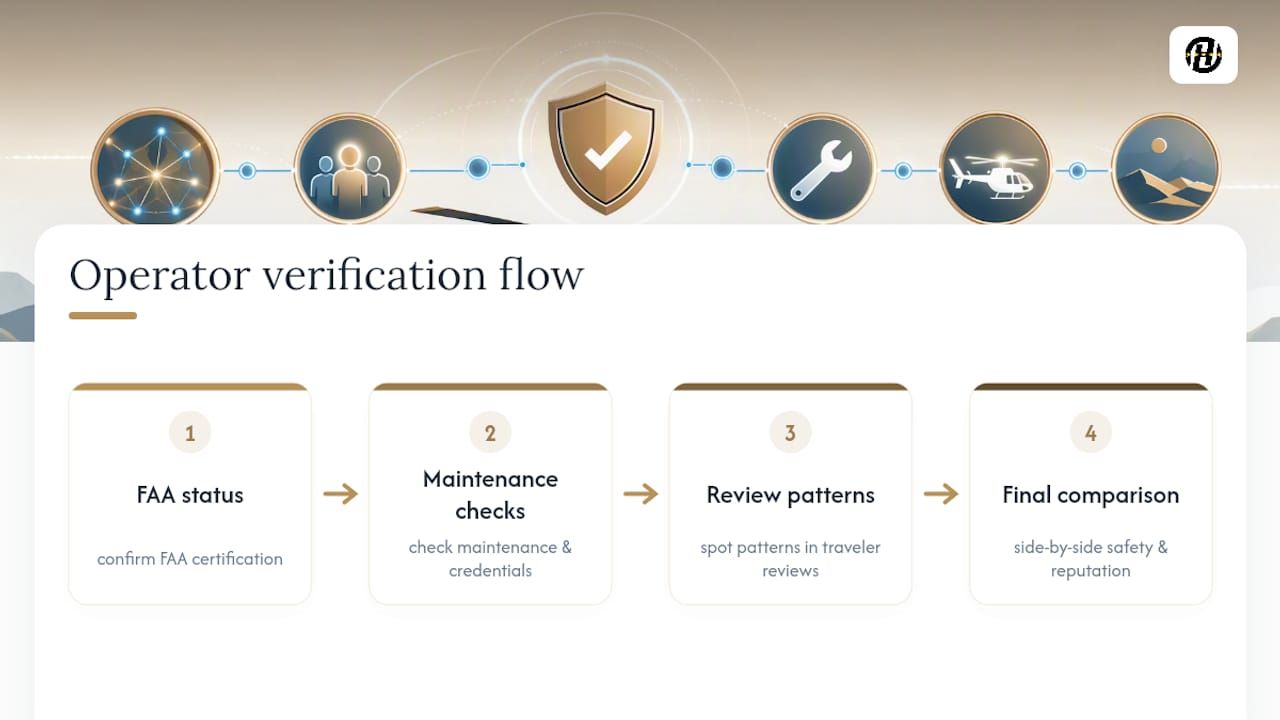
Helicopterstour cross-checks FAA-certified operator status against maintenance and credential records before adding a tour to its listings, then layers in traveler review volume to spot patterns a single review can’t show. That combination gives first-time flyers a faster way to compare safety indicators and reputation side by side, rather than digging through scattered operator websites one at a time.
A First Flight, From Nervous to Grinning
Most first-timers describe the same arc: nerves during check-in, a spike of adrenaline as the rotors spin up, then genuine surprise at how calm the cruise feels once you’re airborne. The views take over fast. If photos matter to you, request a window seat when you book, breathe through the first thirty seconds, and let the crew’s directions do the rest.
— Justin
Ready to Book? How Helicopterstour Helps You Choose With Confidence
Booking a helicopter tour blind, through a random search result, means gambling on an operator’s safety record and hoping the reviews you find are honest. The platform offers listings tied back to verified FAA-certified status, cross-checked traveler ratings, and clear pricing, so you’re comparing real safety signals instead of marketing copy.

You can filter listings by flight duration, price range, and route to match your budget and nerve level, whether you want a quick 15-minute skyline flight or a longer scenic tour with a landing. If you’re deciding between a private cabin and a shared seat, the site’s private versus shared tour breakdown lays out the tradeoffs plainly. Start by browsing the curated helicopter tour listings and pick a departure time and operator that fits what you read here.
Sources
Confirm operator certification directly through the FAA’s aircraft and operator guidance, then review packing specifics on Helicopterstour’s what to wear guide and its full before, during, and after breakdown before you book.
FAQ
What should I expect on a helicopter tour?
Expect check-in, a short safety briefing, a quick weigh-in, boarding, a brief takeoff sensation, a smooth low-altitude cruise with pilot commentary through your headset, and a controlled landing, all within 15 to 45 minutes for most tours.
Do you tip a helicopter tour pilot?
Tipping isn’t required, but a $10 to $20 tip per passenger is common when the pilot delivers strong commentary or goes out of the way to line up photo opportunities.
Do they weigh you before helicopter rides?
Many operators weigh passengers before boarding, since accurate weight data is required to balance the aircraft and assign seats correctly, not to judge appearance.
Is it better to do a helicopter tour in the morning or afternoon?
Morning flights typically offer calmer air and softer light for photos, while afternoon and sunset flights trade some wind for dramatic color. Check Helicopterstour’s best time of day guide for route-specific advice.
How much does a helicopter tour typically cost?
Short city flights often run in the range of a quick sightseeing add-on, mid-length scenic tours cost more, and premium tours with a landing stop cost substantially more than a standard cruise.
Recommended
- Best Helicopter Tours for First-Time Flyers: What to Expect and How to Prepare
- Stunning 13-15 minutes Private Short Helicopter Flight Review 2026
- Are Helicopter Tours Worth It for Families and Kids? Safety, Age Limits and Tips
- What to Expect on a Helicopter Tour: Before, During, and After