
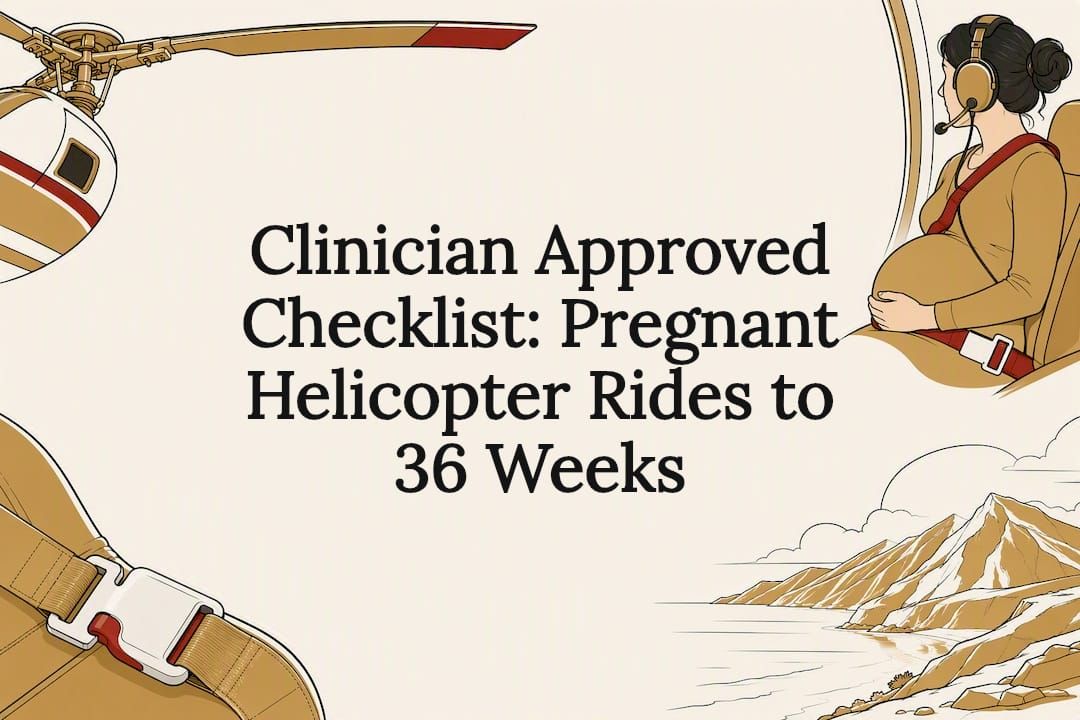

A pregnant helicopter ride is generally safe for uncomplicated pregnancies before the late third trimester, as long as your obstetric provider clears you and the operator confirms its pregnancy policy in writing. Skip it if you have pregnancy complications, are past about 36 weeks, or the operator has no clear policy for expectant passengers.
TL;DR:
- Expectant passengers are generally allowed on short, calm helicopter flights before about 36 weeks of pregnancy, with operator policies often citing cutoffs between 28 and 34 weeks.
- Longer or more adventurous flights, door-off configurations, or routes far from medical facilities are typically restricted for pregnant travelers to reduce risks like falls or delayed emergency response.
- Blood clot prevention measures such as compression stockings, short tour durations, and proper seatbelt placement low across the hips are crucial to minimizing DVT risk during helicopter rides.
- Confirming a clear, written pregnancy policy from the operator, along with a healthcare provider’s clearance, is essential for safety and legal documentation before booking.
- Factors like turbulence, vibrations, and cabin temperature can cause discomfort or nausea but do not pose specific health risks to a healthy pregnancy at typical low-altitude sightseeing tours.
Table of Contents
- Understanding The Pregnant Helicopter Ride Approval Process
- When Pregnancy Stage Changes the Flying Calculus
- The Real Risks Behind a Pregnancy Helicopter Adventure
- How To Prepare For A Helicopter Ride While Pregnant
- Questions To Settle Before You Book
- Why Operator Verification Matters More Than You’d Think
- An Editorial Note On Choosing Memory Over Risk
- Find A Vetted, Pregnancy-Friendly Helicopter Tour
- Sources
- FAQ
Understanding The Pregnant Helicopter Ride Approval Process
Every operator sets its own rules for expectant passengers, and those rules vary more than you’d expect. Some cap bookings at 28 weeks. Others allow flights through 34 weeks with a doctor’s note. A few don’t mention pregnancy at all in their FAQ, which is itself a red flag worth asking about directly.
Tour length and aircraft configuration drive most of these differences. A 12-minute scenic loop over a coastline puts far less strain on your body than a 90-minute charter with multiple landings. Doors-off flights, common at some adventure-tour operators, add wind exposure, colder temperatures, and a harder brace position that most companies simply won’t allow for pregnant passengers regardless of trimester.
Operators aren’t being cautious for legal cover alone. Boarding and exiting a helicopter can become more difficult as a pregnancy progresses due to the physical demands such as stepping up, low doorways, and potentially walking across windy helipads. Emergency access matters too: if a passenger needs medical attention mid-flight, the pilot needs a plan for the nearest facility, and some tour routes fly far from one.
What to expect when you check an operator’s pregnancy policy:
- Trimester cutoffs, commonly somewhere between 28 and 36 weeks depending on the company.
- A doctor’s note requirement for anyone visibly or verbally identified as pregnant, especially in the third trimester.
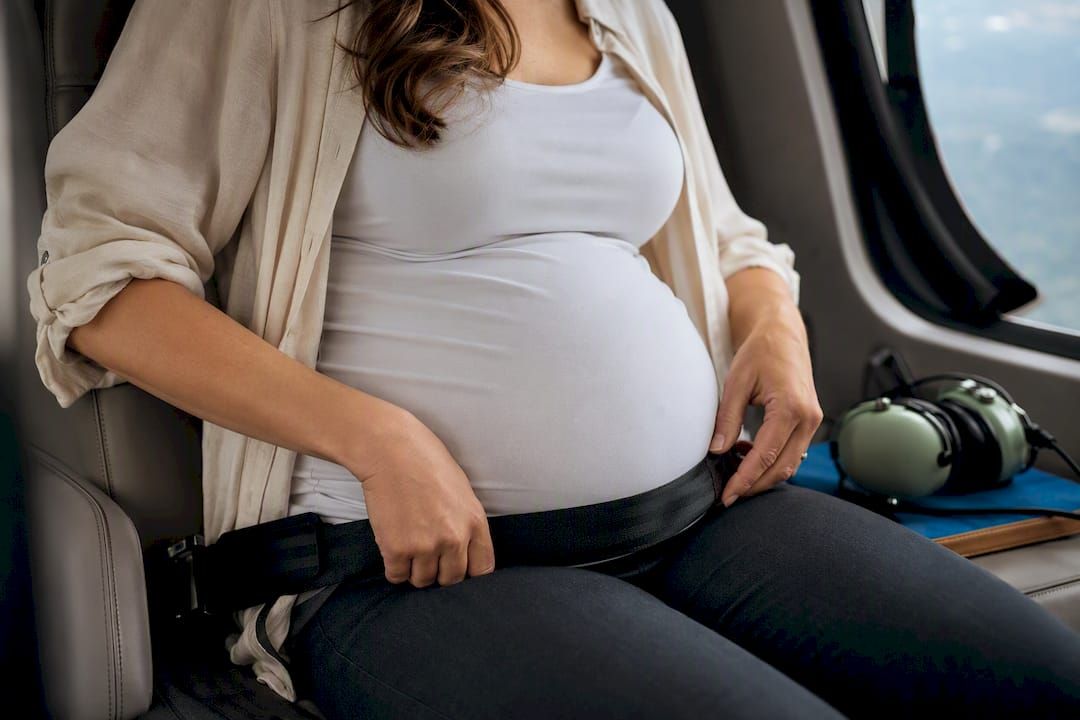
- Seatbelt accommodation, since standard lap belts need to sit low, not across the belly.
- Format restrictions, ruling out doors-off, low-altitude passes, or extended charters for pregnant guests even when short scenic flights remain open.
When Pregnancy Stage Changes the Flying Calculus
The American College of Obstetricians and Gynecologists states that occasional air travel is generally safe for uncomplicated pregnancies until about 36 weeks. The second trimester, roughly weeks 18 through 24, is often cited as the lowest-risk window: morning sickness has usually faded, energy is higher, and the risk of preterm labor is still low. Mayo Clinic echoes the same 36-week benchmark for uncomplicated pregnancies, while flagging that certain conditions change the calculation entirely.
A handful of conditions routinely prompt a clinician to advise against flying, on a helicopter or otherwise:
- Preeclampsia or gestational hypertension
- Multiple pregnancy (twins or more), which shifts the risk timeline earlier
- Severe anemia
- A history of preterm labor or premature rupture of membranes
- Placental abnormalities, including placenta previa
None of the major clinical guidance treats helicopter altitude as a special hazard on its own. Sightseeing helicopters typically cruise well below the cabin-pressurized altitudes of a commercial jet, and a travel medicine review on NCBI Bookshelf notes that typical low-altitude tours usually pose no oxygen risk to a healthy pregnancy. The bigger variables are duration, vibration, and how the body handles sitting still in a cramped cabin, not the number on the altimeter.
That distinction is worth repeating because it reframes the whole decision: clinicians are weighing maternal-fetal health overall, not calculating a safe ceiling in feet. A 15-minute flight at 1,000 feet and a 15-minute flight at 3,000 feet carry roughly the same practical risk profile for a healthy pregnancy. What actually shifts the risk is whether you sit still for two hours beforehand in a car or waiting room, whether the cabin is warm and dry, and whether you have an underlying condition your provider already flagged.
The Real Risks Behind a Pregnancy Helicopter Adventure
Turbulence and hard landings are the most obvious worry, and they’re manageable with one simple habit: keep the seatbelt fastened and positioned correctly for the entire flight, not just during takeoff and landing. If you feel contractions, cramping, or unusual pain at any point, tell the pilot immediately. Most tour helicopters can divert or land within minutes.
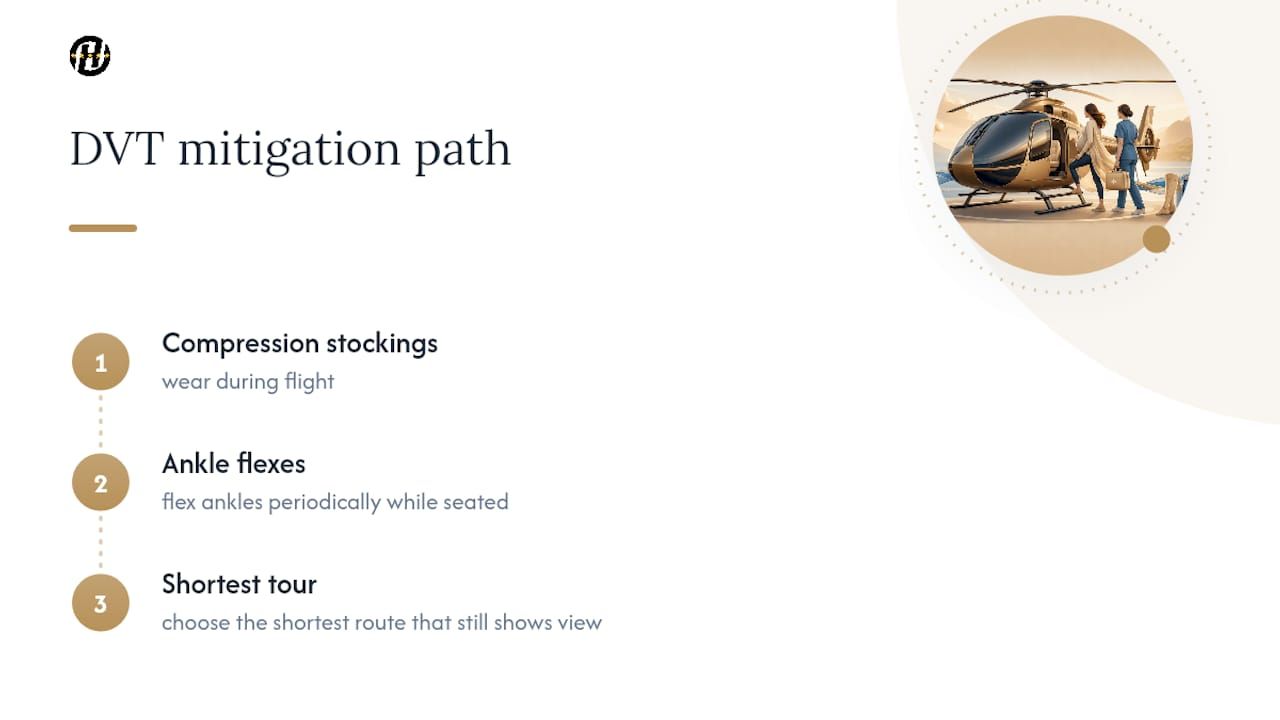
Blood clot risk deserves more attention than it usually gets. Pregnancy already raises the risk of deep vein thrombosis, and sitting immobile in a small cabin, even for a short flight, adds to that. The CDC’s travel guidance for pregnant travelers recommends planning for DVT mitigation before any flight, and the same logic applies to helicopter tours. Compression stockings, periodic ankle flexes, and choosing the shortest tour option that still gets you the view all reduce that risk meaningfully.
Motion sickness is another factor people underestimate. Helicopters vibrate more than fixed-wing aircraft, and the constant low hum through a headset can trigger nausea faster than a car ride would. If your provider has approved an antiemetic that’s safe in pregnancy, carry it. If not, ask about it during your pre-flight consultation rather than guessing.
Finally, consider how far the operator flies from emergency medical care. A tour that loops a downtown skyline near a hospital is a different risk profile than one that heads deep into a remote canyon.
Pro Tip: Ask the operator how long it would take to land and reach a hospital from the farthest point of the route. If they can’t answer quickly, that tells you something about how often they’ve thought this through.
How To Prepare For A Helicopter Ride While Pregnant
- Talk to your obstetric provider first, and be specific: mention your exact gestational age, any risk factors, and that the flight is short and low-altitude. Ask directly whether they’d recommend DVT prevention measures for this trip.
- Get written clearance if the operator asks for one. A simple note confirming your due date and fitness to fly is usually enough, and it saves an awkward conversation at check-in.
- Pack smart. Bring a printed summary of your prenatal record, water, a light snack, and compression stockings if your provider suggested them. If you’re anxious about turnbulence or heights generally, a quick read on flying with anxiety can help you plan coping strategies before you board.
- Dress for comfort, loose layers, supportive shoes, and nothing restrictive around the waist. Our guide on what to wear on a helicopter tour covers the practical basics.
- Position your seatbelt low, under your belly, resting across your hips, not across your abdomen. Keep it fastened the entire flight.
- Hydrate before boarding and flex your feet and ankles every few minutes if the flight runs longer than 20 minutes.
- Avoid doors-off configurations and any tour marketed around low passes or steep maneuvers. A calm, standard sightseeing flight is the safer format at every stage of pregnancy.
Pro Tip: Ask about boarding assistance before you arrive. Stepping up into a helicopter with a growing belly and no handrail is harder than it looks in the brochure photos, and most operators will happily walk you through it if you ask ahead.
Questions To Settle Before You Book
Before you put down a deposit, get straight answers from both sides.
Ask the operator:
- What’s your pregnancy policy, and at what week does it change?
- What altitude and duration should I expect on this specific route?
- Is this a doors-on flight, and can seatbelts accommodate a later-stage pregnancy?
- What’s the emergency plan, and how close is the nearest medical facility along the route?
Ask your clinician:
- Based on my current gestational age and history, am I cleared to fly?
- Do I need DVT prevention measures for a short flight like this?
- Is there anything about my specific pregnancy that changes your answer?
- At what point in the pregnancy would you tell me to stop flying altogether?
Why Operator Verification Matters More Than You’d Think
Helicopterstour checks that operators hold current FAA certification and reviews thousands of traveler comments for safety-relevant details before featuring a tour. That matters for expectant passengers specifically, because a pregnancy policy buried three pages deep in a terms document isn’t much use to you.
When you’re comparing tours, look for:
- A clearly stated pregnancy policy on the operator’s own page, not just a verbal answer at check-in
- Cabin space that allows a proper seatbelt fit and easy boarding
- Documented proximity to medical facilities along the flight path
Reading verified reviews first can cut hours off your own research, especially when you’re already managing appointments and everything else pregnancy adds to your plate.
An Editorial Note On Choosing Memory Over Risk
Wanting one more adventure before the baby arrives makes sense. Get medical clearance first, then choose the calmest, shortest scenic flight available. The memory holds up fine at 15 minutes.
— Justin
Find A Vetted, Pregnancy-Friendly Helicopter Tour
This resource provides information on operators’ FAA certification and traveler feedback so users do not have to contact multiple companies to learn about pregnancy policies.

Start by browsing reviewed helicopter tours and filtering for short, calm scenic flights rather than adventure-format routes. If you’re weighing a quieter option, our breakdown of private versus shared helicopter tours explains why a private cabin often makes more sense during pregnancy, and our Viator booking walkthrough shows exactly how to lock in a reservation once you’ve confirmed the operator’s policy fits your situation. Check the operator’s written pregnancy guidelines before you book, then reserve your seat with confidence.
This article is general information, not a substitute for advice from a qualified doctor. Consult a qualified healthcare professional about your own circumstances before acting on anything here.
Sources
- Air travel during pregnancy: ACOG committee opinion
- Air travel during pregnancy: Mayo Clinic expert answers
- Travelers’ Health: Pregnant travelers — CDC
- Travel medicine and pregnancy (NCBI Bookshelf)
FAQ
Is flying at 32 weeks pregnant safe?
For an uncomplicated pregnancy, most clinical guidance from ACOG considers occasional flying safe up to about 36 weeks, but many helicopter operators set their own cutoff earlier, sometimes around 28 to 34 weeks, so check both your provider and the operator’s specific policy.
What rides can I not go on while pregnant?
Avoid doors-off helicopter flights, any tour advertised around steep maneuvers or low passes, and long charters that keep you seated without a break for hours, since these formats increase trauma risk and DVT exposure beyond what a short scenic flight carries.
Can a bumpy ride affect pregnancy?
Turbulence itself rarely causes direct harm in a healthy pregnancy, but hard jolts or sudden drops can be uncomfortable and, in rare cases, trigger contractions, which is why keeping your seatbelt properly positioned low across the hips for the entire flight matters.
What altitude is too high for pregnancy?
Clinical sources including Mayo Clinic don’t set a strict altitude ceiling for healthy pregnancies during typical low-altitude helicopter tours; the greater concerns are flight duration, immobility, and any underlying condition your provider has already flagged, rather than the altitude number itself.
Recommended
- Can You Take a Helicopter Tour If You’re Afraid of Heights? Tips for Nervous Flyers
- Are Helicopter Tours Worth It for Families and Kids? Safety, Age Limits and Tips
- Helicopter Tour Safety: Are Helicopter Tours safe?