

Thunderstorms, low cloud ceilings, and heavy wind are the three conditions that ground helicopter tours most often, and any safety-first operator will rebook you or refund your money rather than fly through them. Light rain or hazy skies, on the other hand, often stay flyable under conservative minima. Because these calls get made close to departure, the smartest move at booking is asking exactly how the operator handles weather delays.
TL;DR:
- Weather conditions like thunderstorms, low cloud ceilings, and heavy wind are almost certain to ground helicopter tours, prompting rebooking or refunds.
- Light rain or haze are usually manageable, but pilots and operators closely monitor wind gusts, temperature, and visibility to ensure safety before flying.
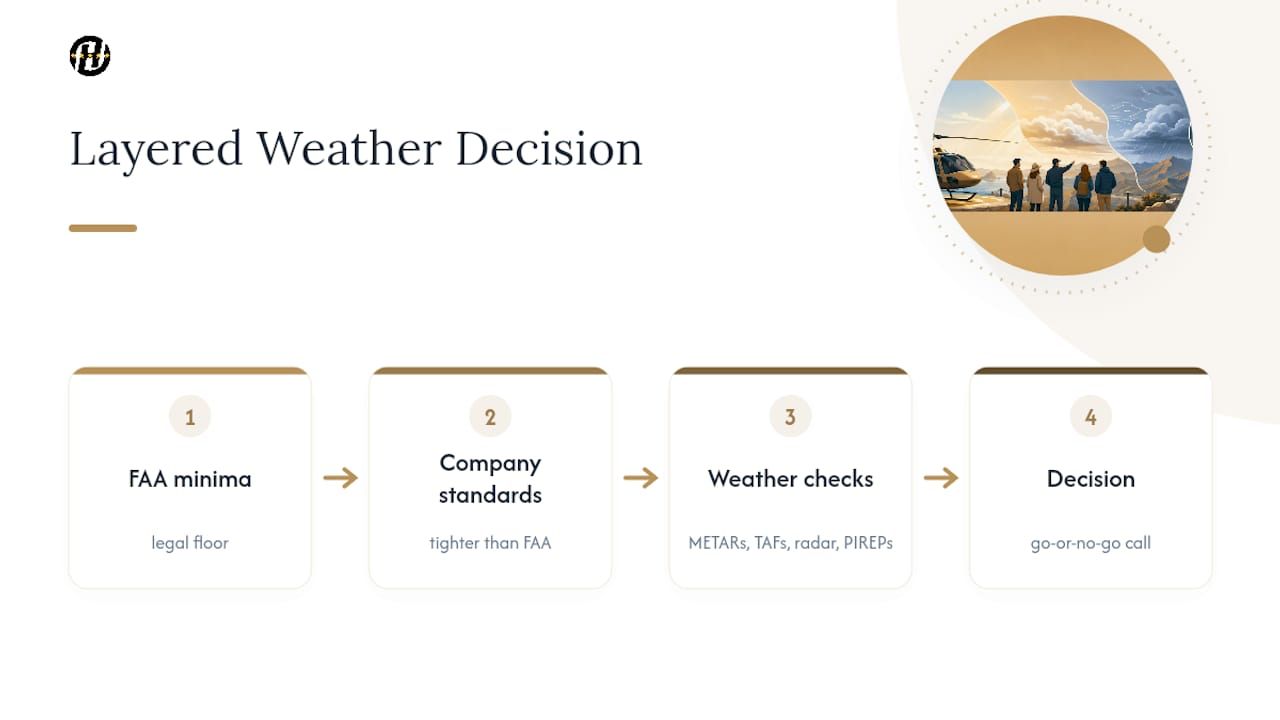
- Operators set stricter weather minimums than legal requirements, often reviewing real-time METARs, TAFs, radar, and pilot reports before making flight decisions.
- Cancellations due to weather are standard industry practice, with full refunds or free rebookings offered if the operator initiates the cancelation.
- Booking early in the day and during spring or fall increases the chances of good weather; flexible scheduling and backup plans help accommodate weather unpredictability.
Table of Contents
- What Weather Conditions Affect Helicopter Tour Safety
- Operator Weather Minimums and How Pilots Decide
- What Happens When a Tour Gets Canceled for Weather
- The Best Time of Day and Season to Fly
- Packing and Prep for a Weather-Ready Flight
- Why Operator Weather Calls Deserve Your Trust
- Low Visibility Days: Your Alternatives
- A Pilot’s-Eye View on Weather Calls
- Book With Operators Who Take Weather Seriously
- Sources
- FAQ
What Weather Conditions Affect Helicopter Tour Safety
A helicopter tour depends on the pilot being able to see the ground, hold a stable flight path, and avoid turbulence that could compromise control near terrain. That’s why visibility, wind, precipitation, and temperature all factor into a go or no-go decision.
Visibility matters most because sightseeing flights operate under Visual Flight Rules (VFR), meaning the pilot navigates by looking outside, not by instruments alone. Fog, haze, or a low cloud base can obscure landmarks and terrain, potentially compromising safety.
Wind is trickier than most passengers assume. A steady 25-knot headwind is often manageable, but gusty, shifting wind near a landing pad creates a different problem: crosswind components that make touchdown unstable. Rotor blades respond to every gust, so a helicopter feels turbulence that a fixed-wing plane might barely notice.
Precipitation and thunderstorms bring the sharpest risks. Heavy rain cuts visibility and can affect engine and rotor performance, while thunderstorms carry lightning, hail, and wind shear, which pilots avoid by staying 10 to 20 miles from convective cells.
- Fog or haze that obscures landmarks or terrain
- Wind gusts that exceed the aircraft’s crosswind tolerance
- Thunderstorm cells anywhere near the planned route
- High heat and altitude, which reduce rotor lift and engine performance
- Icing conditions, rare but disqualifying when they occur
Pro Tip: Ask your operator what their gust spread policy is, not just their steady wind limit. A forecast showing “15 gusting 28” can ground a flight that a simple “20 knot” forecast would not.
Operator Weather Minimums and How Pilots Decide
Operators set numeric thresholds well before departure day, and those numbers are usually stricter than what federal aviation rules technically allow. FAA VFR minima serve as the legal floor, but sightseeing companies routinely add a safety margin on top because the priority is a comfortable, clear-view flight, not just a legal one.
Crosswind limits sit lower than steady wind limits for a simple reason: a crosswind complicates the exact moment a helicopter is closest to the ground, during takeoff and landing at a confined heliport.
The decision itself isn’t a solo call. A pilot and an operations lead typically review conditions together, pulling from several sources:
- METARs for current conditions at the departure point
- TAFs for the forecast window covering the flight
- Radar imagery to track approaching cells
- PIREPs from other pilots who’ve flown the same airspace recently
EASA’s guidance on VMC flight planning recommends this same layered approach: check the forecast, monitor live conditions, and stay ready to divert or turn back if anything shifts. The pilot-in-command has final authority, and a conservative company minimum almost always wins over a technically-legal FAA minimum when the two disagree.
What Happens When a Tour Gets Canceled for Weather
Reputable operators treat weather cancellations as routine, not as a customer service failure. The standard practice across the industry is a full refund or a free rebooking within a year when the operator initiates the cancellation, not the passenger.
- Confirm the operator’s stated weather minima before you pay, not after.
- Ask what time window they use to make the call, since many decide within one to three hours of departure.
- Find out how they notify passengers, whether by text, email, or phone.
- Build slack into your travel schedule so a same-day cancellation doesn’t wreck other plans.
- Save your confirmation email, since it usually spells out the exact refund or rebook policy.
Weather can shift fast, so don’t expect a firm answer days in advance. A morning that looks perfectly clear from your hotel window can still hold marginal conditions along the flight route.
The Best Time of Day and Season to Fly
Morning flights consistently offer the calmest air and clearest sightlines. Grey but clear mornings can produce excellent flights, while afternoon heat builds thermal turbulence and storm activity that raises cancellation odds later in the day.
- Book the first flight slot of the day when your schedule allows it.
- Treat spring and fall as generally more stable, though local climate always matters more than the calendar.
- Weigh sunset and doors-off flights carefully. The light is dramatic, but afternoon cancellation rates run higher in many climates.
- Keep your dates flexible and start checking forecasts several days out, not the night before.
Pro Tip: If a sunset flight is the whole reason for your trip, book a backup morning slot too. You get the photos either way, and you’re not gambling the entire experience on one weather window. Our guide to the best time of day for a helicopter tour breaks down midday and sunset trade-offs in more detail. The same logic applies to any weather-dependent outdoor plan; a season-by-season golf guide for Madrid shows how differently local climate patterns can behave even a few hundred miles apart.
Packing and Prep for a Weather-Ready Flight
Cabins run cooler than the ground temperature suggests, even on a warm afternoon, so layered clothing beats a single heavy jacket you can’t remove.
- Bring valid photo ID and arrive at least 30 minutes early, longer for late-day flights.
- Confirm weight and seating policies directly with the operator, since these affect balance and safety.
- Protect your camera from window glare, and secure any loose gear if you’ve booked a doors-off flight.
- Pad your schedule around the flight window in case a delay pushes you into a rebooking slot. Our packing and camera tips guide covers layering and lens care in more depth.
Why Operator Weather Calls Deserve Your Trust
FAA VFR minima set the legal floor, but most scenic operators fly to tighter company standards, and pilots hold commercial rotorcraft ratings that require ongoing training on exactly these judgment calls. The decision-making process, cross-checking METARs, TAFs, radar, and PIREPs, isn’t a formality; it’s the same layered method aviation authorities recommend for any VFR flight.
Helicopterstour.com independently reviews FAA-certified operators and aggregates traveler ratings, which makes it easier to spot companies that talk openly about their weather policies instead of burying them in fine print. A stated cutoff time, a clear rebooking policy, and a visible safety record are the three signals worth checking before you book.
Low Visibility Days: Your Alternatives
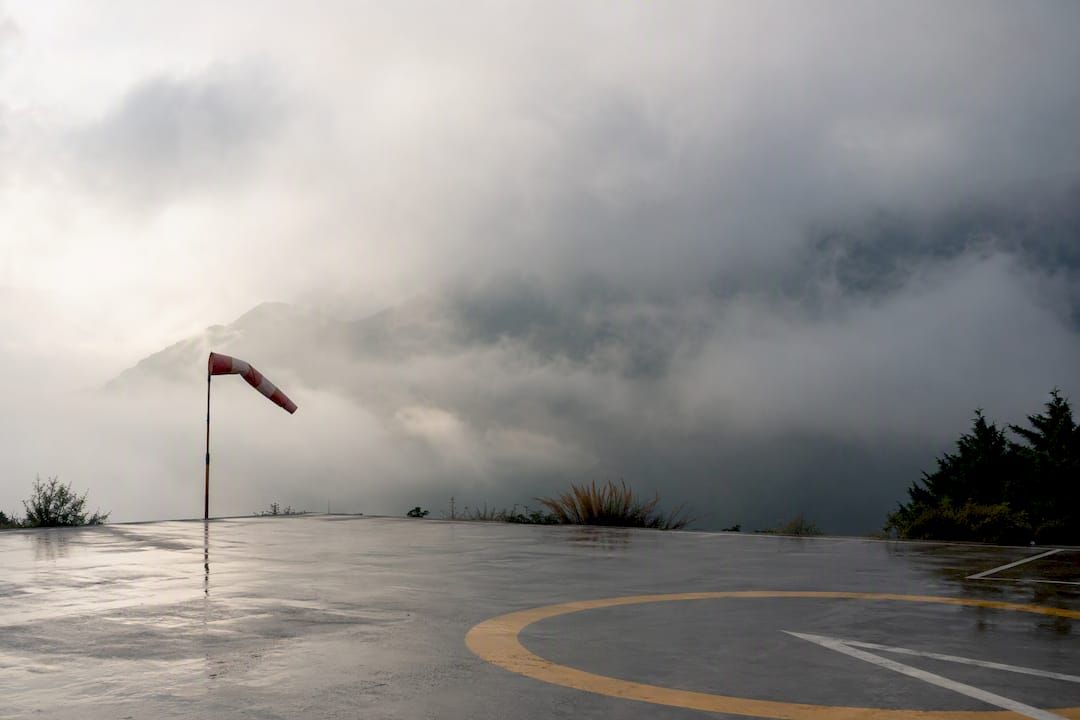
Some days simply won’t produce a flyable window, and a good operator will tell you that plainly rather than push a marginal flight through. Fog that never lifts, a low overcast layer sitting on the hills, or a slow-moving storm system can all keep the entire route grounded from sunrise to sunset.
Night tours are one alternative worth asking about where operators offer them, since city-light routes over illuminated skylines don’t depend on daytime cloud ceilings the same way scenic mountain or canyon routes do. Ground-based options, like an observation deck visit or a helicopter simulator experience, give you the aerial perspective without the weather dependency at all.
If your trip has a hard deadline, the smartest tactic is booking a flight early in your visit rather than on your last available day. That leaves room to shift to a different day, or a different type of experience entirely, if the sky simply doesn’t cooperate. A route through mountains or over coastline can also hold a microclimate that looks nothing like the weather at the departure heliport, which is exactly why pilots evaluate the full route and its alternates before ever spinning up the rotors.
A Pilot’s-Eye View on Weather Calls
Every conservative weather cancellation is a pilot protecting a margin most passengers never see: the gap between “technically legal” and “comfortably safe.” That gap exists on purpose. When a flight gets called off, it’s rarely a coin flip. It’s a specific number on a specific gauge falling short of a specific line, and the reward for that caution is almost always a smooth rebooking or a full refund, not a fight.
— Justin
Book With Operators Who Take Weather Seriously
Helicopterstour is your shortcut past the guesswork of vetting an operator’s safety practices yourself. Every listing draws on independently verified FAA-certified operators and thousands of aggregated traveler ratings, so you can see how a company actually handles a stormy forecast before you hand over a deposit. Compare stated weather policies, cancellation terms, and rebooking windows side by side on Helicopterstour, then decide which operator’s approach fits how flexible your trip can be. If you’re weighing group size as part of that decision, our private versus shared tour comparison is worth a read too. Check availability, confirm the operator’s weather cutoff, and book your flight today.
Sources
- Weather and Helicopter Tours: When We Fly and When We Don’t – Safety Guidelines for Aerial Excursions
- Can helicopters fly in bad weather? Safety limits and pilot protocols explained – Helicopted
- Weather Threat For VMC Flights (EASA)
FAQ
Do helicopter tours fly in the rain?
Light rain can often be flown safely with proper equipment, but heavy rain, lightning, and hail are common triggers for cancellation because they cut visibility and pose direct hazards to the aircraft.
Are helicopter tours cold?
Cabin temperatures run cooler than ground level even in warm months, so dressing in removable layers keeps you comfortable regardless of the season.
What is too windy for a helicopter ride?
Most operators cap steady winds around 30 to 35 knots and crosswind components closer to 15 to 20 knots, since gusty crosswinds make takeoff and landing unstable.
What is the best time to take a helicopter tour?
Morning flights typically offer the calmest air and clearest visibility, since afternoon heat often builds thermal turbulence and storm activity that raises cancellation risk.
Recommended
- Can You Take a Helicopter Tour If You’re Afraid of Heights? Tips for Nervous Flyers
- Best Helicopter Tours for First-Time Flyers: What to Expect and How to Prepare
- Are Helicopter Tours Worth It for Families and Kids? Safety, Age Limits and Tips