


The best time to book a helicopter tour is a morning flight during shoulder season, ideally scheduled with some advance notice. Early morning departures, in the first hour or two after sunrise, deliver the calmest air and clearest visibility of the day. Shoulder season (spring and fall in most regions) gives you that same clarity without peak-season crowds or prices. Golden hour flights offer dramatic light but tend to sell out quickly, so booking early is recommended.
TL;DR:
- Booking early in shoulder season generally offers better availability and lower prices, with two to three weeks needed for most routes.
- Morning flights shortly after sunrise provide the clearest air and calmest conditions, ideal for photography and smooth rides.
- Golden hour tours deliver dramatic lighting but tend to sell out weeks in advance, requiring early reservation for preferred slots.
- Midday flights carry increased turbulence and haze risks, especially in summer or regions prone to thermal activity.
- Weekday departures, particularly Tuesday through Thursday, usually have better availability and lower demand than weekend options.
Table of Contents
- What’s the Best Time of Day to Fly: Morning, Midday, or Sunset?
- When’s the Best Season for a Helicopter Tour?
- How Does Destination Change the Timing Advice?
- How Far Ahead Should You Book, and Does the Day of the Week Matter?
- What Should You Check About Weather and Cancellation Policies?
- What’s a Good Booking Checklist for the Best Photos?
- Why Trust This Timing Advice?
- Quick Take: Perfect Shot vs. Practical Planning
- Book Your Ideal Time Slot Through Helicopterstour
- Selected Primary Sources
- Sources
- FAQ
What’s the Best Time of Day to Fly: Morning, Midday, or Sunset?
Morning wins for consistency. In the first two hours after sunrise, the air is typically calmer and the sky clearer, which means smoother flights and sharper photos, a pattern that holds true across most scenic helicopter routes. Temperatures are cooler too, which matters more than people expect once you’re strapped into a glass bubble with the sun coming up.
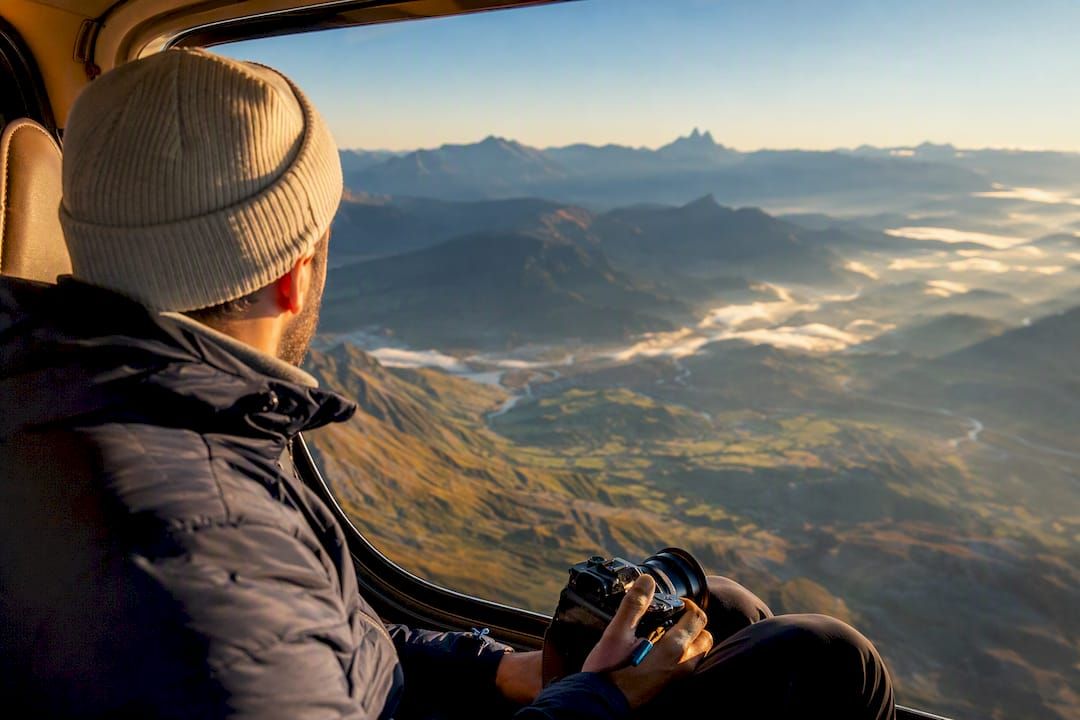
Golden hour, the hour before sunset, is the photographer’s favorite. Low, warm light throws long shadows across canyons and coastlines that flat midday sun just can’t produce. The catch: everyone else wants that slot too, and sunset flights routinely sell out days or weeks ahead.
Midday is the one to approach carefully. Heat builds haze into the air, glare bounces off water and rock, and on some routes rising thermals add bumps you won’t feel at dawn.
- Morning (first 1 to 2 hours after sunrise): clearest air, calmest winds, best for photography
- Golden hour (last hour before sunset): dramatic light, high demand, book early
- Midday: convenient scheduling, but more haze and turbulence risk
Pro Tip: Look up your destination’s exact sunrise and sunset times a few days before your trip, then work backward. If sunrise is at 6:45 a.m., aim to be in the air by 7:30 for the sweet spot before the air starts to warm and stir.
When’s the Best Season for a Helicopter Tour?
Season shapes your odds of good weather more than any other single factor. Here is how the three windows typically stack up:
- Peak season brings the most stable weather in many destinations, but also the highest prices, fullest schedules, and least flexibility if you need to reschedule.
- Shoulder season (think late spring or early autumn in most temperate markets) tends to offer a strong balance of clear skies, thinner crowds, and better rates, which is why it’s generally recommended for helicopter flights.
- Off-peak season delivers the lowest prices and the most schedule flexibility, but weather-driven cancellations climb, especially in regions prone to winter storms or summer monsoon patterns.
Destination matters just as much as the calendar. Island routes often peak visually during waterfall season, when seasonal rains fill cascades that run dry the rest of the year. Temperate mountain and forest regions look their best when autumn foliage turns, usually a tight three to four week window. Desert routes tend to reward spring visits, when dust and heat haze haven’t yet thickened the air.
Weather-driven cancellation risk isn’t flat across the year, either. A clear morning in the wrong season can still get scrubbed if a frontal system rolls through overnight, which is one more reason shoulder season earns its reputation as the safer bet for both visibility and reliability.
How Does Destination Change the Timing Advice?
The same clock doesn’t work everywhere. Local geography and airspace rules bend the general rules in specific ways.
- Coastal and island routes often look their best in the morning, before humidity thickens the horizon into haze. If waterfalls are the draw, check the seasonal rainfall calendar first.
- Canyon and desert routes punish midday in summer with heat shimmer that dulls contrast in photos. Spring and fall mornings are the sweet spot, a pattern Grand Canyon operators build their schedules around.
- Mountain routes flip the usual afternoon caution into a hard rule. Rising heat triggers thermals and updrafts later in the day, so early mornings after a cool night tend to fly smoother and clearer.
- City and skyline tours answer to airspace restrictions and set operating hours as much as weather. Availability windows are often narrower, so check what times are actually offered before you build a golden-hour plan around a route that may not fly that late.
How Far Ahead Should You Book, and Does the Day of the Week Matter?
Two to three weeks ahead covers most shoulder-season morning or golden-hour bookings. Iconic routes, holiday periods, and peak summer months push that out to four to six weeks, since the best slots on popular routes fill up fast.
Weekdays are your quiet-hours advantage. Tuesday through Thursday flights generally have better availability and calmer operations at the launch pad, since weekend demand pulls in day-trippers and tour groups. That weekend premium is real: expect tighter schedules and sometimes higher prices for Saturday and Sunday departures.
- Ask about waitlists if your preferred slot is full. Cancellations happen more often than you’d think.
- Flexible-date search tools can surface a better time slot on a nearby day.
- If a specific time is non-negotiable, a private flight lets you set the clock yourself rather than fitting into a shared departure grid.
What Should You Check About Weather and Cancellation Policies?
Wind, low cloud ceilings, and fog cause most weather cancellations, and mornings aren’t immune. A clear dawn can still get grounded if an incoming front hasn’t fully cleared, so flexibility matters even when the forecast looks good the night before.
Before you book, confirm these four things:
- Whether a weather cancellation gets you a full refund or a rebooking voucher
- How many days or hours the rebooking window covers
- Any minimum passenger requirements that could cancel a shared flight
- What the operator’s contingency plan looks like for multi-day trips
Trust signals matter more than a slick website. Confirm the operator holds current FAA certification, publishes maintenance and safety information plainly, and carries a real volume of verified traveler reviews rather than a handful of suspiciously glowing ones.
What’s a Good Booking Checklist for the Best Photos?
Getting the timing right is only half the job. What you do once the slot is booked determines whether your photos actually look like the ones in the brochure.
- Pick morning for reliability or golden hour for drama, then confirm the operator’s cancellation and rebooking terms.
- Request the better-view seat for your route (usually the side away from the sun for shadow definition, or facing the main landmark).
- Arrive at least 20 to 30 minutes early. Weigh-ins, safety briefings, and seating assignments eat time you don’t want to rush.
- Ask about door-on versus door-off options if the operator offers them and local regulations permit it.
Pro Tip: Set your camera to a shutter speed of at least 1/500 to freeze motion blur from vibration, and shoot at an angle to the window glass rather than straight through it. That single adjustment cuts glare and reflections dramatically.
Why Trust This Timing Advice?
These recommendations aren’t guesswork. Helicopterstour verifies FAA-certified operators and cross-references thousands of traveler reviews to spot which departure windows consistently deliver on visibility and smooth flying. That aggregated pattern is where the morning and golden-hour recommendations actually come from, not a single blog post or one operator’s marketing copy.
- Operator safety records and maintenance transparency are checked before a tour gets listed.
- Cancellation and rebooking policies are compared across operators, not just accepted at face value.
- Filters for time of day, route type, and cancellation terms let you match a tour to this article’s advice in a few clicks.
Quick Take: Perfect Shot vs. Practical Planning
Fly morning for clarity, golden hour for drama, and book shoulder season whenever your itinerary allows it. Weather will occasionally override your plan anyway, so build in one flexible day if you can.
— Justin
Book Your Ideal Time Slot Through Helicopterstour
This platform helps users find tours matching this timing advice and offers information on operators’ departure times and rebooking policies. Search and compare over 1,000 tours filtered by departure time, route type, and operator cancellation terms, all backed by verified traveler reviews and FAA-certification checks done in advance.

If a shared morning flight doesn’t fit your schedule, a private tour lets you lock in the exact hour you want instead of competing for a shared departure slot. Browse current listings, check operators’ cancellation policies, and reserve your preferred time slot directly through partner booking pages before availability decreases.
Selected Primary Sources
Check exact sunrise and sunset times through your destination’s local weather service, and review Helicopterstour’s seasonal visibility guide or booking walkthrough for deeper planning detail.
Sources
- When Is the Best Time to Book Helicopter Rides for Scenic Travel Experiences? – ConservaMom
- 10 Things to Know Before Booking a Helicopter Tour – UPLARN
FAQ
Is It Better to Book a Morning or Afternoon Helicopter Tour?
Morning is generally the better choice for visibility and smoother flying, since the air is calmer and clearer before midday heat builds haze and turbulence. Afternoon and sunset flights offer dramatic light but come with higher demand and a greater chance of heat-related bumps.
What Is the Average Cost of a Helicopter Tour?
Pricing varies widely by route, duration, and whether you book a shared or private flight, with short scenic routes typically costing less than long or remote itineraries. Compare listings directly on Helicopterstour for current pricing on specific tours and destinations.
Are Helicopter Tours Worth the Money?
For the vantage points alone, most travelers find them worth it, since aerial views of canyons, coastlines, and skylines simply aren’t accessible any other way. Value comes down to picking the right time slot and operator, which is where checking cancellation policies and reviews pays off.
What Is the Best Time to Take a Helicopter Ride?
The best time is early morning, within the first one to two hours after sunrise, when air is calmest and visibility is sharpest. Golden hour before sunset is the strongest runner-up for photography, though it requires booking earlier due to demand.
How Far in Advance Should I Book a Helicopter Tour?
Book two to three weeks ahead for most shoulder-season morning or golden-hour slots, and four to six weeks ahead for peak-season travel or iconic routes. Popular time slots on well-known routes can fill up even earlier during holidays.
Recommended
- Best Time of Day for a Helicopter Tour: Morning, Midday or Sunset
- Best Time of Year to Take a Helicopter Tour, Weather and Visibility
- Private vs Shared Helicopter Tours: Which One Should You Book?