
Hey there, I’m Justin. If you’ve been waiting for the summer crowds and the triple-digit heat to fade before you book a flight over the canyon, you’re thinking along the right lines, because a fall Grand Canyon helicopter tour is one of the most comfortable ways to see it. Cooler air, lighter crowds, and softer light make autumn a favorite season for a lot of visitors, though shorter days and shifting weather mean the details matter. This guide covers what the National Park Service says about fall weather, how flights from Las Vegas and Tusayan differ, why a Grand Canyon sunset helicopter tour is such a popular choice in October, and how to find the best time for a Grand Canyon helicopter tour on your own dates.
Key Takeaways
- Fall suits flights at either rim: Maverick Helicopters says the season brings fewer crowds and favorable weather, while summer is the busiest time for flights.
- The National Park Service puts South Rim highs in the 60s°F in September and the 50s°F by November, with rim nights typically below freezing and summer rains tapering off in mid-September.
- Las Vegas flights go to the West Rim; the sunset flight we reviewed runs about 2.5 hours, includes 30 minutes at the landing site, and is listed from $676 per person.
- Tusayan flights start just minutes from the South Rim entrance, and the 45-minute flight in our featured video departs from there.
- Days get shorter through fall, so sunset departures move earlier. Book early, hold a backup day, and confirm the weather policy before you pay.
Jump to a Section
- Why Fall Is a Great Season to Fly Over the Canyon
- Fall Weather at the Canyon: What the Park Service Says
- What Fall Looks Like From the Air
- Watch: A 45-Minute Flight From Tusayan
- Las Vegas Flights to the West Rim: The Sunset Option
- South Rim Flights From Tusayan
- Choosing the Best Date and Time to Fly
- What to Wear and Bring in Fall
- Insider Tips from Justin
Why Fall Is a Great Season to Fly Over the Canyon

Fall hits a sweet spot for aerial sightseeing. The punishing summer heat has backed off, the afternoon thunderstorms that define the monsoon season are tapering, and the canyon is usually less crowded than it is in the middle of summer. Maverick Helicopters’ seasonal guide says fall can be a good choice for a tour at either rim because there are fewer crowds and the weather is favorable, while it calls summer one of the busiest times of the year for flights. That is a big reason a fall Grand Canyon helicopter tour appeals to first-timers who want a calmer experience.
There is a comfort angle too. The heliport waiting areas and canyon landing sites are outdoors, and the same guide notes that West Rim days in summer can climb past 100°F. In fall you can step out at a landing site without that blast-furnace heat, which makes the whole outing easier on kids, older travelers, and anyone who doesn’t do well in the sun. If you’ve been weighing the best time for a Grand Canyon helicopter tour against a busy family calendar, fall’s milder conditions make a strong case.
Fall Days Are Shorter, and the Best Canyon Seats Go First
Every week in autumn trims the daylight, which leaves fewer flight windows each day, and sunset departures tend to sell out on weekends. If a Grand Canyon flight is on your trip list, don’t wait until your Vegas schedule is set. See which helicopter tours still have seats on your dates, compare options, and reserve yours while the choice is still wide open.
Check Availability & Reserve Your Seat →
We may earn a commission if you book through this link, at no extra cost to you.
Fall also gives you real variety in how you see the canyon. A flight from Las Vegas takes you out over Lake Mead and Hoover Dam to the West Rim, while a flight from Tusayan puts you over the South Rim a few minutes from the park entrance. Both are better in comfortable weather, which is why so many travelers settle on autumn when they’re hunting for the best time for a Grand Canyon helicopter tour, and why a well-planned fall Grand Canyon helicopter tour tends to feel relaxed rather than rushed.
Fall Weather at the Canyon: What the Park Service Says
The most reliable weather numbers come from the National Park Service. According to the park’s weather and climate page, South Rim highs fall from the 60s°F in September to the 50s°F by November, and overnight lows typically drop below freezing on the rim. Inside the canyon it’s a different world: highs move from the 90s°F in September to near 70°F by November, with nights that stay in the warm 50s and 60s along the river.
The same page says summer rains typically diminish in mid-September, and that fall is drier overall, with fewer days of precipitation. That’s good news for a helicopter, because storms and low cloud are among the main reasons flights get delayed or cancelled. It isn’t a guarantee, though. The Park Service also notes that early winter snow storms have been known to occur in the transition season, and that winter weather typically begins by November. In my read, that makes late September and October the safest window for a fall Grand Canyon helicopter tour, with November a little more of a gamble.
What does that mean on the day of your flight? Helicopters need good visibility and manageable wind, so the operator makes the final call. Our sunset review notes that wind, dust storms, or thunderstorms can cause delays or cancellations, and that operators typically offer rescheduling or a refund when weather forces a cancellation. The review also says to verify the policy at booking, and I’d do exactly that. Fall gives you better odds than a monsoon-season flight, but it is still a weather-dependent activity.
One more thing the numbers tell you: the rim and the canyon floor are very different climates, and a flight can touch both. Dress for the coolest place you’ll stand, not the warmest place you’ll fly over. If you’re comparing seasons to decide when to fly, remember that fall’s mild days come with chilly mornings and evenings on the rim, so layers matter more than you might expect.
What Fall Looks Like From the Air
I want to be upfront about something: the Grand Canyon doesn’t have a New England-style leaf season, and I’d rather you know that before you book. The color you fly over is mostly rock, with layered reds, oranges, and buffs that look much the same all year. What changes in fall is the light, the air, and the crowds around you.
The sun sits lower in the sky as autumn goes on, which stretches shadows across the canyon walls and gives the buttes and side canyons more depth than the flatter, high-noon light of summer. That is especially true late in the day, which is a big part of why a Grand Canyon sunset helicopter tour is so appealing in October. The flip side is that daylight shrinks week by week, so the golden hour arrives earlier and the window for good light gets shorter.
Scale is the other thing that never changes. As the description of our featured video points out, the Grand Canyon is roughly 277 miles long, up to 18 miles wide, and over a mile deep, carved over millions of years by the Colorado River. From the ground, an overlook shows you one frame of that. From a helicopter, you see how the rims, buttes, and side canyons connect, and that sense of scale is the real reason people book a flight.
Watch: A 45-Minute Flight From Tusayan
This 55-second Short from our channel shows a 45-minute helicopter flight that departs from Tusayan, Arizona, the gateway town just minutes from the South Rim entrance. According to the video description, the route carries you out over the canyon’s towering rims, buttes, deep side canyons, and the Colorado River winding far below. It features a review from a first-time visitor who calls the views emotionally breathtaking, says the ride was smooth, and felt comfortable within minutes, and who praises pilot Drew for making the family feel safe. The description adds a few practical notes: flights are weather-dependent, so bring sunglasses and a camera, dress comfortably, and arrive a little early for check-in. The clip isn’t labeled as a fall flight, but it is a good preview of what a fall Grand Canyon helicopter tour from the South Rim side looks like.
Las Vegas Flights to the West Rim: The Sunset Option
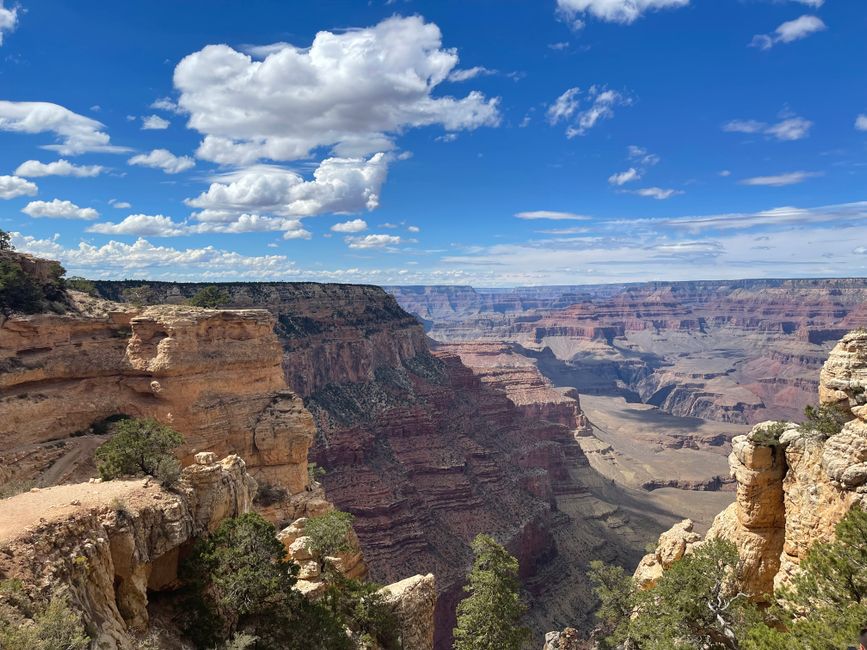
Most visitors who aren’t staying near the park fly out of Las Vegas. Those flights head east over Lake Mead and Hoover Dam to the West Rim rather than the South Rim most people picture. Our own write-up of a champagne sunset helicopter flight from Las Vegas is a good example of what the West Rim option looks like, and it’s the flight I’d start with if you’re building a Vegas itinerary around the canyon.
That review describes a tour of about two and a half hours in total, including roughly 70 to 80 minutes of flight time and 30 minutes at the landing site. It’s listed from $676 per person with a 4.8 out of 5 rating from 443 verified reviews. The helicopter flies over Hoover Dam and Lake Mead, lands at the Grand Canyon West Rim on a private bluff overlooking the Colorado River for a champagne-style toast, and then returns over the Las Vegas Strip timed for sunset.
A Grand Canyon sunset helicopter tour is a natural fit for fall because departure times are built around the sunset, so they shift with the seasons. The review notes that summer tours leave later in the evening and winter tours leave earlier in the afternoon, and the reviewer rates fall as likely the best season, with comfortable temperatures and fewer crowds. As days shorten through October, expect a sunset slot that arrives noticeably earlier than it does in June, so check your exact departure time rather than assuming an evening start.
It’s a special-occasion flight, not a budget one. The reviewer calls it romantic and best for couples, special occasions, and photographers who want doors-on views, and says it’s less suited to budget travelers, thrill-seekers who want doors-off flying, or anyone short on time. Eat beforehand, because the stop centers on the toast rather than a full meal. If a Grand Canyon sunset helicopter tour is what you’re after, the review also says sunset tours sell out, especially on weekends, so lock in your date early. For a wider comparison, our helicopter tour reviews by destination let you see how other Las Vegas and Arizona flights compare.
South Rim Flights From Tusayan

If you’re already visiting the national park, the South Rim side is the easy choice. Tusayan sits just minutes from the South Rim entrance, which, as our video description notes, means a convenient start and more time in the air. The National Park Service says on its hours and seasons page that the South Rim is open 24 hours a day, 365 days a year, and that reservations are strongly recommended during spring, summer and fall. That’s a useful reminder that fall is still a busy visiting season even after the summer peak.
Elevation shapes the experience, too. Maverick’s guide puts the South Rim at about 6,000 feet and says it’s cooler than the West Rim in summer. In fall that cooler air is mostly a pleasant change, but remember the Park Service’s note that rim lows typically fall below freezing, so early-morning departures can start out chilly even when the afternoon feels mild.
In practice, the choice comes down to what you want from the flight. A West Rim trip from Las Vegas packs in Hoover Dam, Lake Mead, a canyon landing, and the Strip skyline, while a South Rim flight from Tusayan gives you the park’s classic scenery without a long transfer from Vegas. Either can work as a fall Grand Canyon helicopter tour, but they are different trips, so choose based on where you’re sleeping and what you want to see.
A quick honesty note: I haven’t reviewed fall-specific pricing for Tusayan departures, so check current rates and seasonal schedules directly with the operator or on a booking page. If you’re also shopping for the biggest names in aerial sightseeing, our 2026 ranking of the top helicopter tours in the world shows where the Grand Canyon sits among the bucket-list flights.
Choosing the Best Date and Time to Fly
So what is the best time for a Grand Canyon helicopter tour in fall? My short answer is late September through October, at sunset or early in the day, and midweek if your schedule allows. That recommendation leans on the Park Service’s weather data, which shows drier air and milder rim temperatures in those weeks, and on Maverick’s note that fall brings fewer crowds. It’s my read of the sources, not a guarantee, and it’s worth checking the forecast as your date gets close.
Morning versus sunset is mostly about what you want. Mornings are often calmer and let you fly before the day’s weather develops, while sunset flights trade that for warm light and a dramatic return to the lights of Las Vegas. If photography is the goal, a Grand Canyon sunset helicopter tour usually wins; if you’re prone to motion sickness or just want the smoothest ride, ask the operator about morning departures.
Booking early matters more than most people expect. Maverick advises reserving well in advance, and our sunset review says those tours sell out, especially on weekends. As that review points out, booking early in your Vegas trip also leaves room to reschedule if weather scrubs the first attempt, which is the single most useful habit I can pass along.
Finally, build in a buffer. Don’t put your flight on your last day if you can avoid it, and consider holding a backup date. The real best time for a Grand Canyon helicopter tour is the one that lines up mild weather, an open seat, and a spare day in case the first plan doesn’t fly. A well-timed fall Grand Canyon helicopter tour is as much about flexibility as it is about the calendar.
What to Wear and Bring in Fall
Layers are the rule. Rim lows typically fall below freezing and highs drop into the 50s°F by November, per the Park Service, so bring a warm layer even for a flight that departs in the afternoon. The heliport and landing areas are outdoors, and a sunset flight means you’ll be standing around as the temperature falls with the light. Comfortable shoes and a jacket you can take off are better than anything bulky.
From our video description, bring sunglasses and a camera, dress comfortably, and arrive a little early for check-in. For a Vegas sunset flight, remember to eat beforehand, since the champagne stop is more of a toast than a meal. If you’re not sure what to pack, our guide on what to wear on a helicopter tour covers clothing, cameras, and comfort in more detail.
A last word on expectations. Photos through helicopter windows can pick up reflections, and the lower fall sun creates strong contrast, so a camera with manual control or a phone you know well will help. That is doubly true on a Grand Canyon sunset helicopter tour, where the light changes by the minute. Whatever you bring, keep it simple and secure. The point of the flight is the view, and our full review of the sunset flight from Las Vegas is a good way to see what that view looks like before you commit.

Insider Tips from Justin
Hey everyone, Justin here. Fall flights reward a little planning, and a few habits make the difference between a good outing and a great one. Here’s what I tell people before they book:
- Check the forecast a few days out — Fall is drier than summer, but early storms can still show up, and the operator makes the final call on the day.
- Confirm your sunset time — Departures are tied to sunset, and sunset moves earlier every week in autumn.
- Book early in your trip — It leaves room to reschedule if weather cancels your first date.
- Ask about the cancellation policy — Our review says to verify it at booking, so get the details in writing before you pay.
- Pick the rim that fits your trip — West Rim from Las Vegas, or South Rim from Tusayan if you’re staying near the park.
- Pack layers and eat first — The rim gets cold at night, and the champagne stop is a toast, not a meal.
Looking for a Helicopter Tour?
Browse our full directory of helicopter tour reviews by location to find the best experience wherever you’re headed.
Want to see the canyon before you pick a date? Head to our video library to watch Grand Canyon helicopter tour videos before you book, with real flight footage from the West Rim, the South Rim, and Las Vegas departures, so you can compare the routes, the views, and the pace of each flight side by side.
Fall Grand Canyon Helicopter Tour FAQ’s
Question: Is fall a good time for a Grand Canyon helicopter tour?
Answer: Yes. Maverick Helicopters says fall suits a tour at either rim because there are fewer crowds and the weather is favorable, and the National Park Service says summer rains typically diminish in mid-September.
Question: What is the weather like at the Grand Canyon in fall?
Answer: According to the National Park Service, South Rim highs fall from the 60s°F in September to the 50s°F by November, with rim lows typically below freezing. Inside the canyon, highs move from the 90s°F in September to near 70°F by November.
Question: Do Grand Canyon helicopter tours show fall colors?
Answer: Not in the New England sense. The canyon’s color comes mostly from layered rock, so what changes in fall is the light, the air, and the crowds.
Question: How long is a Las Vegas sunset helicopter tour to the Grand Canyon?
Answer: Our review of a Las Vegas sunset flight describes about two and a half hours in total, including roughly 70 to 80 minutes of flight time and 30 minutes at the landing site.
Question: How much does a Grand Canyon sunset helicopter tour cost?
Answer: The Las Vegas sunset flight we reviewed is listed from $676 per person, so confirm the current price and your date before you book.
Question: Where do Grand Canyon helicopter tours depart from?
Answer: Las Vegas flights head over Lake Mead and Hoover Dam to the West Rim, while Tusayan flights depart just minutes from the South Rim entrance.
Question: How long is the helicopter flight from Tusayan?
Answer: The Tusayan flight featured in our video is 45 minutes and flies over the canyon’s rims, side canyons, and the Colorado River.
Question: What is the best time for a Grand Canyon helicopter tour in fall?
Answer: In my read of the sources, late September through October is the safest window, at sunset or early in the day, and midweek if your schedule allows. Check the forecast as your date gets close.
Question: Do I need to book a fall Grand Canyon helicopter tour in advance?
Answer: Yes. Maverick advises reserving well in advance, our sunset review says those tours sell out especially on weekends, and the National Park Service says reservations are strongly recommended during spring, summer and fall.
Question: What happens if weather cancels my helicopter flight?
Answer: Wind, dust storms, or thunderstorms can cause delays or cancellations, and operators typically offer rescheduling or a refund. Verify the policy when you book.
Question: Does the sunset flight time change in fall?
Answer: Yes. Departures are timed to sunset, so they shift with the seasons: later in the evening in summer and earlier in the afternoon in winter, which means they move earlier through fall.
Question: What should I wear on a Grand Canyon helicopter tour in fall?
Answer: Dress in layers, since rim lows typically fall below freezing. Bring sunglasses and a camera, wear comfortable clothes, and arrive a little early for check-in.
Question: Where can I watch Grand Canyon helicopter tour videos?
Answer: Our helicopter tour video library on helicopterstour.com lets you search by destination, including the Grand Canyon, so you can see real flight footage before you book.