
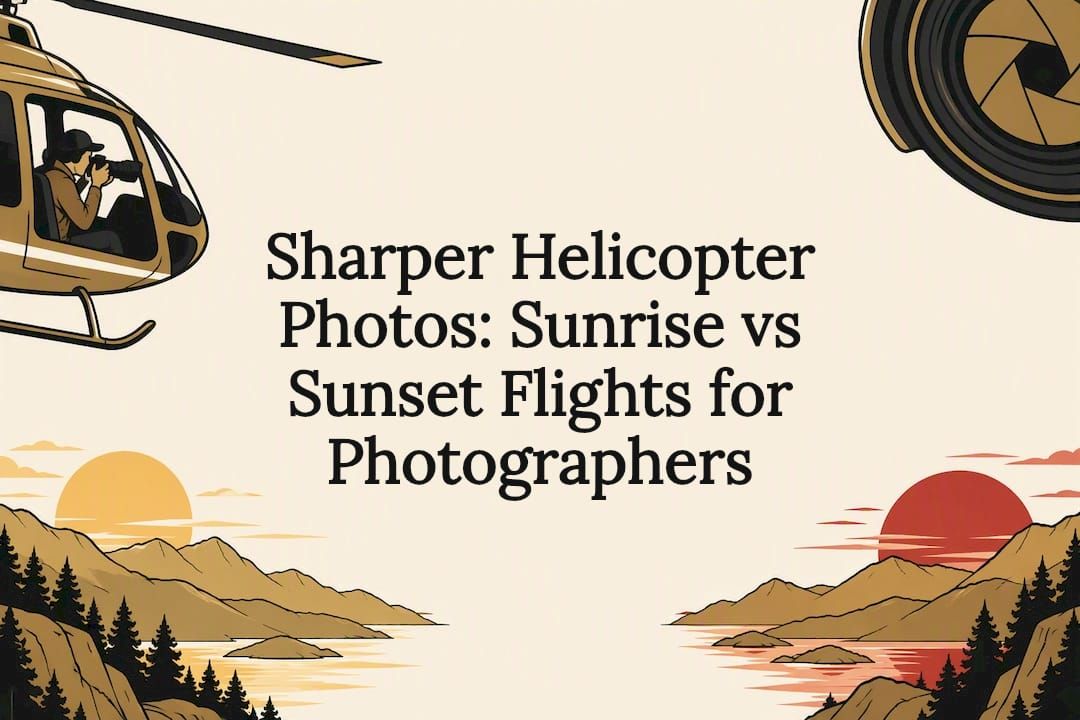

Choose sunrise for calm air, soft light, and clearer landscape detail with fewer crowds. Choose sunset for bold color, dramatic silhouettes, and a more cinematic, romantic mood. Neither time is objectively “better” for a helicopter tour; the right pick depends on whether you’re chasing crisp photos or a memorable atmosphere.
TL;DR:
- Sunrise flights generally offer clearer air and crisper landscape details, making them ideal for landscape photography and natural terrain shots.
- Sunset flights provide more vivid sky colors and dramatic silhouettes, which enhance cityscape or coastline images with a romantic or cinematic atmosphere.
- For better photo quality, set a fast shutter speed, manually adjust white balance, and request doors-off seats facing your subject to minimize glare and reflections.
- Morning flights benefit from calmer, more stable air, but may be affected by fog or low clouds, while evening flights often bring warmer cabin temperatures and more atmospheric haze.
- Booking early for sunrise and well in advance for sunset is recommended, as sunset tours tend to fill more quickly and have tighter schedules around golden hour shifts.
Table of Contents
- Sunrise vs. Sunset Helicopter Views: How Light Changes Everything
- Camera Settings and Doors-Off Tips for Helicopter Photography
- Weather, Turbulence, and Safety by Time of Day
- Booking Logistics: Timing, Duration, and Price
- Sunrise or Sunset: Matching the Flight to Your Priorities
- How Helicopterstour.com Checks Operators Before You Book
- Do Sunrise and Sunset Flights Affect Wildlife Differently?
- Getting Ready: What to Pack and Expect for Either Flight
- A Photographer-First Verdict on Timing
- Book a Verified Sunrise or Sunset Flight With Confidence
- Sources
- FAQ
Sunrise vs. Sunset Helicopter Views: How Light Changes Everything
The sun’s angle at both ends of the day does something midday light can’t: it stretches shadows, warms color temperature, and softens contrast across the whole landscape. Photographers call this window golden hour, and it’s the reason both sunrise and sunset flights sell out faster than midday slots.
The two ends of the day aren’t interchangeable, though. Morning air tends to be calmer and often clearer in many inland locations, since the ground hasn’t heated up enough yet to stir dust, haze, or thermal currents into the atmosphere. That clearer air at sunrise means crisper edges on canyon walls, coastlines, and mountain ridgelines, which is exactly what landscape photographers want. Evening air has spent all day absorbing heat and moisture, so sunset often brings a bit more haze, but that same haze scatters light into the reds, oranges, and pinks that make skyline shots look almost painted.
- Sunrise favors: soft, layered shadows on canyon walls, coastal cliffs, and desert terrain
- Sunset favors: fiery sky gradients, glowing clouds, and dramatic cityscape or coastline silhouettes
- Both share: low sun angle, long shadows, and warmer color temperature than midday flights
One industry comparison puts it simply: sunrise tours suit serene landscape photography, while sunset tours suit vivid, dynamic skyline shots. If your goal is a clean, detailed shot of natural terrain, sunrise usually wins. If you want a sky full of color behind a skyline or coastline, sunset delivers more drama more often.
Camera Settings and Doors-Off Tips for Helicopter Photography
Getting a usable shot at either end of the day means fighting two enemies: motion blur from the aircraft and glare from the windows. Here’s how to beat both.
- Set a fast shutter speed. Keep it at 1/500 or faster to freeze vibration from the rotor and cabin. Slower speeds turn sharp canyon lines into soft smears.
- Adjust white balance manually. Auto white balance often overcorrects the warm tones that make sunrise and sunset shots special. Set it to “cloudy” or a custom Kelvin value around 5,500 to 6,500 to preserve the golden cast.
- Request a doors-off flight if photography is your priority. Shooting through acrylic windows almost always introduces glare, scratches, or reflections, and doors-off seating removes that barrier entirely.
- Pick your seat with the sun’s position in mind. Ask the operator which side faces your subject. On sunset flights over a coastline, the ocean-facing seat usually beats the land-facing one.
- Smartphone shooters should turn off Live Photo and Smart HDR. Both features slow the capture and increase blur risk. A basic stabilizer grip helps more than any app setting.
Pro Tip: If you’re stuck with a doors-on aircraft, shoot at a slight angle to the window instead of straight through it. That single adjustment cuts most glare without needing a polarizing filter.
Weather, Turbulence, and Safety by Time of Day
Pilots don’t just pick sunrise or sunset for the view. Air behavior changes meaningfully between the two windows, and that shapes comfort, cancellations, and even what you should wear.
Morning flights typically launch into the calmest air of the day, since the ground hasn’t warmed enough to generate thermal updrafts. Smoother morning conditions are one reason operators favor early departures when safety allows it. The trade-off is fog or low cloud ceilings in some coastal and canyon regions, which can delay or shift a sunrise slot.
Evening flights often mean warmer cabin temperatures and more dramatic sky conditions, but also a higher chance of late-day sea breezes or lingering thermal activity, especially near coastlines and open desert.
- Dress in layers for sunrise; temperatures at altitude can feel 15 to 20 degrees cooler than on the ground.
- Expect a lighter jacket to suffice for sunset flights in most seasons.
- Helicopters retain powered directional control that balloons lack, but pilots still evaluate visibility, wind, and storm activity before every departure, and may adjust the route or cancel for safety regardless of the time slot.
- Ask your operator about its cancellation and rebooking policy before you commit to either window.
Booking Logistics: Timing, Duration, and Price
Sunrise flights demand earlier hotel pickups, often 45 minutes to an hour before wheels-up, since check-in, safety briefings, and weigh-ins all happen before the sun clears the horizon. Sunset flights give you a more relaxed morning but a tighter afternoon, since golden hour shifts by minutes each week depending on season.
- Standard tours commonly run 20 to 30 minutes in the air, though private charters can extend that to cover more ground or hover longer over a landmark.
- Typical pricing for scenic sunrise or sunset flights generally falls within a moderate price range per person, though exact rates vary widely by route, aircraft, and market.
- Sunset slots often fill faster than sunrise slots in many booking calendars, largely because they’re marketed as romantic or celebratory experiences.
- Book sunrise a few days out if flexible; book sunset well in advance for weekend dates, especially around anniversaries or holidays.
Compare a private versus shared helicopter tour before you book. Shared flights cost less but come with fixed seating that may not favor your preferred camera angle.
Sunrise or Sunset: Matching the Flight to Your Priorities
Different travelers want different things from the same 30 minutes in the air, and matching your profile to the right window saves you from a disappointing booking.
- Photographers and landscape lovers should choose sunrise. Calmer air and softer light produce the cleanest detail on canyons, coastlines, and mountain ridgelines.
- Couples and romantics should choose sunset. The mood, color, and slower-paced evening pairing (dinner, a proposal, a toast) make it the more cinematic and celebratory choice, and the same warm light that draws couples to sunset weddings works just as well from the air.
- Families and late risers should choose sunset. Skipping a 5:00 AM wake-up call matters more to most families than an extra degree of light quality.
- Time-constrained travelers should choose whichever slot fits their itinerary, since both windows deliver strong visuals; convenience should break the tie.
If motion sickness is a concern, request a forward-facing seat, avoid a heavy meal beforehand, and ask about anti-nausea options before departure regardless of which time you book.
How Helicopterstour.com Checks Operators Before You Book
Picking a time slot only matters if the operator running it is reliable. Helicopterstour.com independently verifies that listed companies hold FAA certification and cross-references thousands of traveler reviews before a tour earns a spot in its guides.
A pilot with thousands of hours over a specific canyon route reads the wind and light differently than one flying it for the first month. Maintenance schedules and cancellation policies matter just as much as the view, because a rescheduled sunrise flight with no clear rebooking policy can wreck a tight travel itinerary.
That verification process is why reviews flag not just the scenery but pilot experience and how an operator handles weather-related delays, information that matters more for a sunrise slot with a tighter cancellation window than for a flexible afternoon booking.
Do Sunrise and Sunset Flights Affect Wildlife Differently?
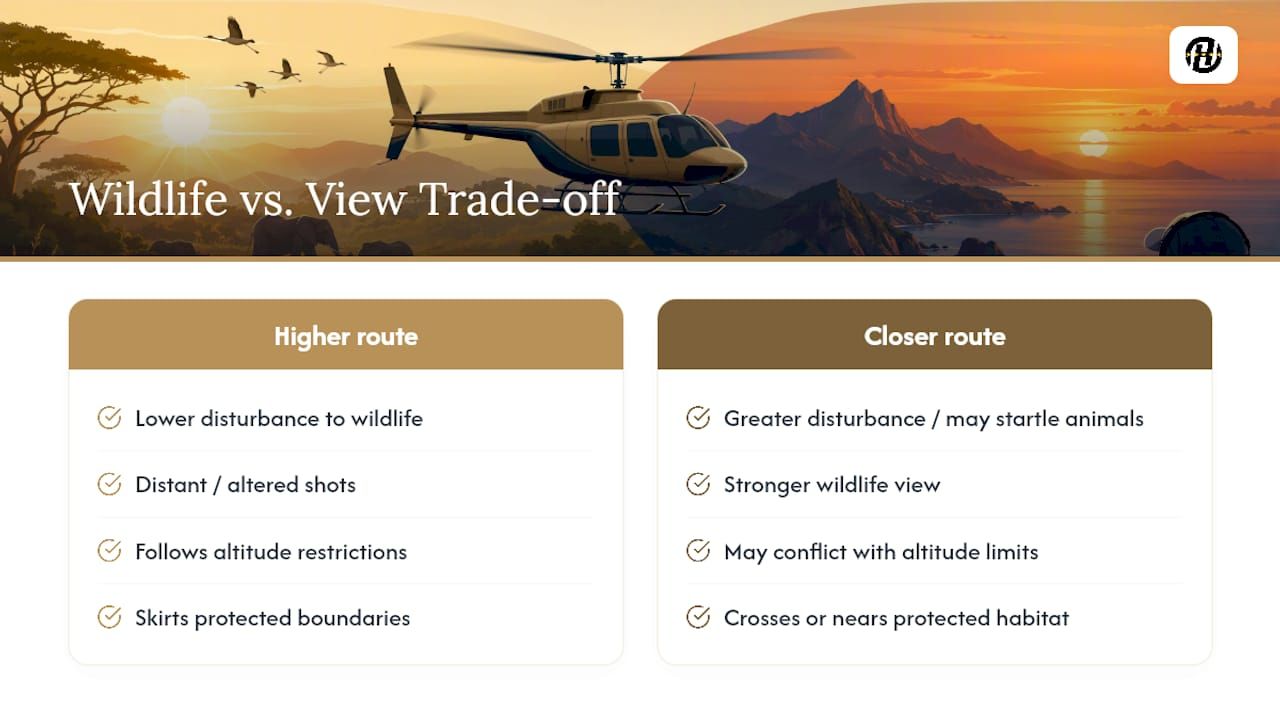
Rotor noise and low-altitude flight paths can disturb wildlife at any hour, but the two golden-hour windows carry different risks depending on location. Sunrise coincides with peak activity for many species, birds feeding, deer grazing near tree lines, and marine life closer to the surface in coastal areas, which means a low-flying aircraft has more potential to startle animals during that window.
Sunset flights tend to overlap less with peak feeding activity in most ecosystems, though evening is prime time for some nocturnal species beginning to stir, particularly in desert and canyon regions. Reputable operators address this by maintaining minimum altitude requirements over sensitive habitats and adjusting flight paths seasonally, especially during nesting or migration periods.
If wildlife impact matters to your choice, ask your operator directly whether their route crosses protected habitat and whether altitude restrictions apply during your travel dates. Established tour companies that fly the same routes regularly usually have this information ready, since local aviation authorities often require it as a condition of their operating permits. A route that skirts a National Park boundary, for instance, may carry seasonal restrictions that shift the whole flight path higher or further out.
This is a small but real consideration for photographers hoping to capture animals from the air. A higher, farther route protects wildlife but also changes your shot, so building that trade-off into your expectations before you book beats being surprised by it mid-flight.
Getting Ready: What to Pack and Expect for Either Flight
The conditions at sunrise and sunset differ enough that a single packing list won’t serve both well. Treat your prep differently depending on which window you book.
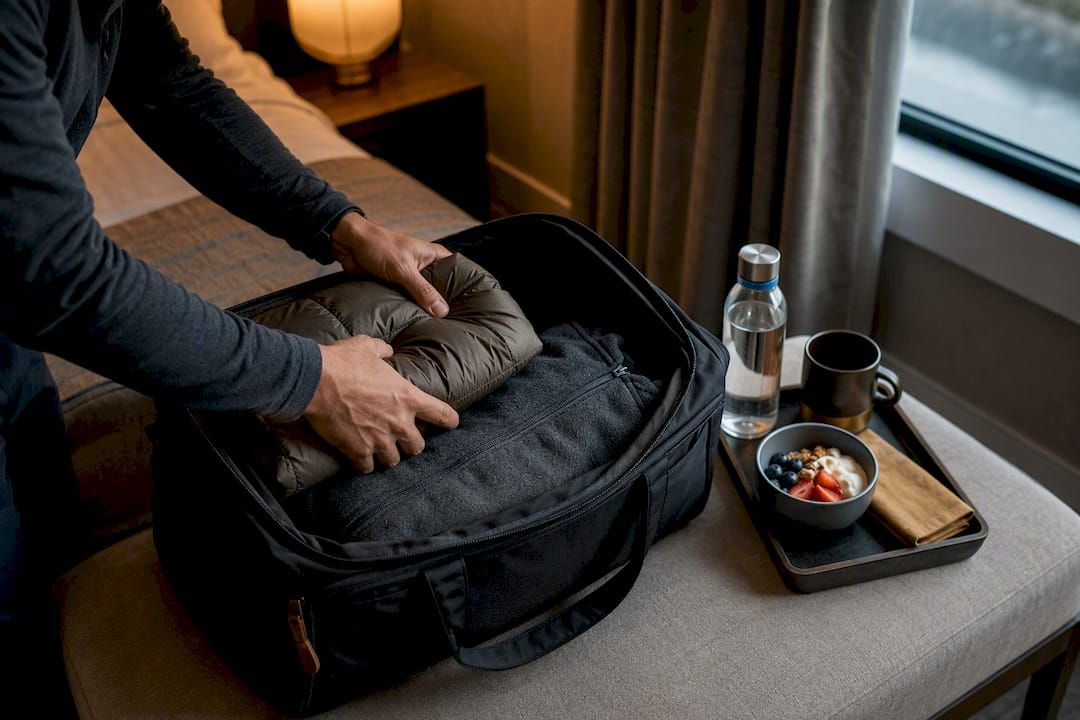
For a sunrise flight, set two alarms. Early departures mean hotel pickup can happen while it’s still dark, and missing that window usually means losing your slot entirely with little chance of a same-day rebooking. Dress in layers you can shed once the cabin warms up, and eat a light breakfast rather than skipping the meal, since low blood sugar combines poorly with the vibration and altitude changes of a helicopter cabin.
For a sunset flight, plan your afternoon loosely. Traffic, dinner reservations, or sightseeing can eat into your buffer time, and arriving late to check-in on a tightly scheduled evening slot can bump you to a later flight or lose your reservation outright.
For either flight, a few universal rules apply:
- Charge camera batteries and phones fully the night before; cold cabin air at altitude drains batteries faster than usual.
- Skip loose scarves, hats, or jewelry that could get pulled toward an open door on a doors-off flight.
- Confirm the operator’s weight and balance requirements ahead of time, since most helicopters have per-seat limits that affect seating assignments.
- Bring sunglasses for sunset flights facing west; the glare on approach to a landing pad can be sharper than expected.
Pro Tip: Screenshot your booking confirmation and pickup address before you leave your hotel. Cell service near remote helipads and canyon rims is unreliable, and a saved screenshot beats hunting for a signal at 5:30 in the morning.
A Photographer-First Verdict on Timing
If you can only book one slot and photos are the priority, book sunrise. Calmer air and cleaner light give you a sharper, more reliable result than the haze and warmth that sunset often introduces. If atmosphere and drama matter more than technical sharpness, sunset earns its reputation as the more romantic, cinematic choice, and reviews of proposal flights over places like New York back that up consistently.
The mistake I see travelers make most often is picking sunset by default because it sounds more special, without asking whether their real priority is the photo or the mood. Those are different goals, and they deserve different answers.
— Justin
Book a Verified Sunrise or Sunset Flight With Confidence
Choosing between sunrise and sunset gets a lot easier once you’re not also gambling on the operator. This site provides a resource for comparing verified sunrise and sunset listings side by side, checking FAA certification and traveler reviews for reliability before including tours in its guides.

Browse verified helicopter tours by route, duration, and time of day, and compare traveler ratings before you commit to a slot. If you’re weighing a proposal or anniversary flight, the best time-of-day breakdown walks through morning, midday, and sunset options in more depth, and New York flyers can start with the top-rated city tours list. Pick your window, check the operator’s rating, and reserve your seat before the slot you want fills up.
Sources
- Hot Air Balloon vs. Helicopter Tours: A Comparison — Northern Light Balloons
- Helicopter vs. Hot Air Balloon – What’s the Difference? | This vs. That
- FareHarbor booking embed — example operator calendar
FAQ
Is it better to book a helicopter tour in the morning or evening?
Neither time is universally better; it depends on your priority. Morning flights offer calmer air and clearer landscape detail, while evening flights, closer to sunset, deliver more dramatic sky color and a more romantic mood.
Is sunrise or sunset better for photos?
Sunrise usually produces sharper, cleaner shots thanks to calmer, clearer air, while sunset produces more vivid, colorful skies that suit dramatic skyline or coastline shots. Choose sunrise for technical sharpness and sunset for mood and color.
Which Grand Canyon helicopter tour is best for sunrise or sunset?
The best choice depends on whether you want quiet, layered morning shadows on the canyon walls or the fiery colors that build over the rim at sunset. Helicopterstour.com lists verified operators for both time slots so you can compare routes and traveler ratings before booking.
What is the best time for a helicopter tour over a major city?
Sunset tends to be the most popular choice for city flights, since glowing skylines and lit-up streets create a more cinematic experience as the sun goes down. That said, sunset slots fill up faster in most booking calendars, so reserve one to two weeks ahead for weekend dates.
How long does a typical sunrise or sunset helicopter flight last?
Standard sunrise and sunset tours commonly run 20 to 30 minutes, though private charters can extend flight time to cover more ground. Exact duration and pricing details for specific routes are listed on the Helicopterstour site.
Recommended
- Best Time of Day for a Helicopter Tour: Morning, Midday or Sunset
- Best Time of Year to Take a Helicopter Tour, Weather and Visibility
- Best Helicopter Tour Locations Compared: Hawaii vs. New York vs Grand Canyon vs Alaska