


Helicopter tour narration comes in two dominant flavors: live pilot commentary, where your pilot points out landmarks in real time and often answers questions, and prerecorded multi-language audio piped through your headset. Live commentary wins on interaction; prerecorded audio wins on consistency and language options. Either way, your safety briefing happens separately, before the sightseeing narration ever starts.
TL;DR:
- Prerecorded audio tracks are ideal for consistent, multilingual narration on high-volume routes, while live pilot commentary offers more interaction but may pause during busy moments.
- Most helicopter tours deliver narration through aviation headsets or downloadable audio files, with sound quality and sanitation practices varying between operators.
- Narration usually begins after safety briefings and headset checks, with commentary pausing during takeoff, landing, and radio calls to ensure pilot focus on flying.
- Language options depend on tourist volume, with popular destinations offering multiple prerecorded channels and regional operators often providing only English or limited language support.
- Booking considerations should include whether narration is live, prerecorded, or hybrid, and if the tour is shared or private, especially for photography or personalized experience needs.
Table of Contents
- What Are the Main Types of Helicopter Tour Narration?
- How Does the Helicopter Deliver Narration to Passengers?
- What Should You Expect During the Flight and Narration?
- Are Helicopter Tours Available in Multiple Languages?
- Why Do Safety Rules Limit What Pilots Say In Flight?
- How Do You Choose a Tour Based on the Narration You Want?
- How Helicopterstour Verifies Narration and Audio Claims
- When Should Narration Style Actually Change Your Booking?
- Find Tours Matched to the Narration Style You Want
- Where to Read More on Safety and Narration
- Sources
- FAQ
What Are the Main Types of Helicopter Tour Narration?
Most scenic flights fall into one of four categories, and the difference shapes your whole experience.
Live pilot commentary is the most personal option. The pilot talks through your headset intercom, naming landmarks as they appear and often reacting to what passengers ask. It feels spontaneous, but it also means the pilot’s attention is briefly split between flying and talking, so commentary tends to pause during busy moments.
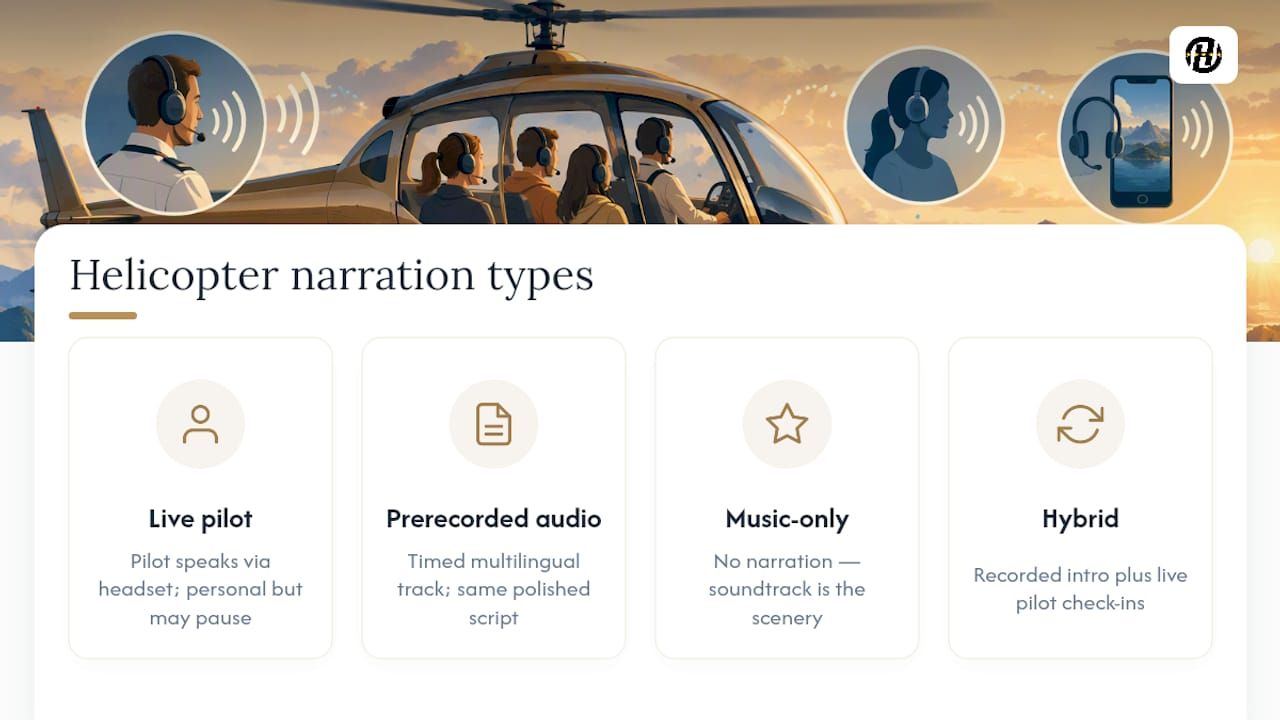
Prerecorded multi-language audio runs on a timed track synced to the flight path. This is common on high-volume tourist routes because it lets one aircraft serve English, Spanish, Mandarin, or French speakers without needing a bilingual pilot for every seat. Content typically identifies visible landmarks and layers in history, geography, or local legend, giving every passenger the same polished script regardless of who’s flying.
Music-only or ambient flights skip narration altogether, usually on sunset or romantic charters where the operator wants the soundtrack to be the scenery itself, not a voice.
Hybrid formats blend a short recorded introduction with live pilot check-ins, which is increasingly common on tours like Grand Canyon helicopter tours where canyon rim landings pair scripted geology facts with live pilot color commentary.
Doors-off and photographer-focused flights change the equation again. Wind noise and specialized headsets often mean narration gets trimmed to essentials, prioritizing your shot over the story.
How Does the Helicopter Deliver Narration to Passengers?
Nearly every scenic helicopter uses an intercom system built into aviation-style headsets, the same over-ear units pilots wear, adapted with a passenger volume dial. That’s how you hear both the pilot and any prerecorded track.
Three delivery methods dominate the industry:
- Aviation headsets with intercom: standard on most tours, these cut engine noise and carry live pilot audio directly to your ears.
- Operator-supplied headphones tied to a multichannel system: common on larger tours, letting each passenger pick a language channel independently.
- Phone-app or downloadable audio: some operators, Niagara Helicopters among them, let you download the narration track before your flight so it plays even where cell service drops out.
Audio quality varies more than people expect. A Fort Lauderdale review of a 20-minute scenic flight noted that included headsets and a pilot who timed commentary to sightlines made the short flight feel complete, not rushed.
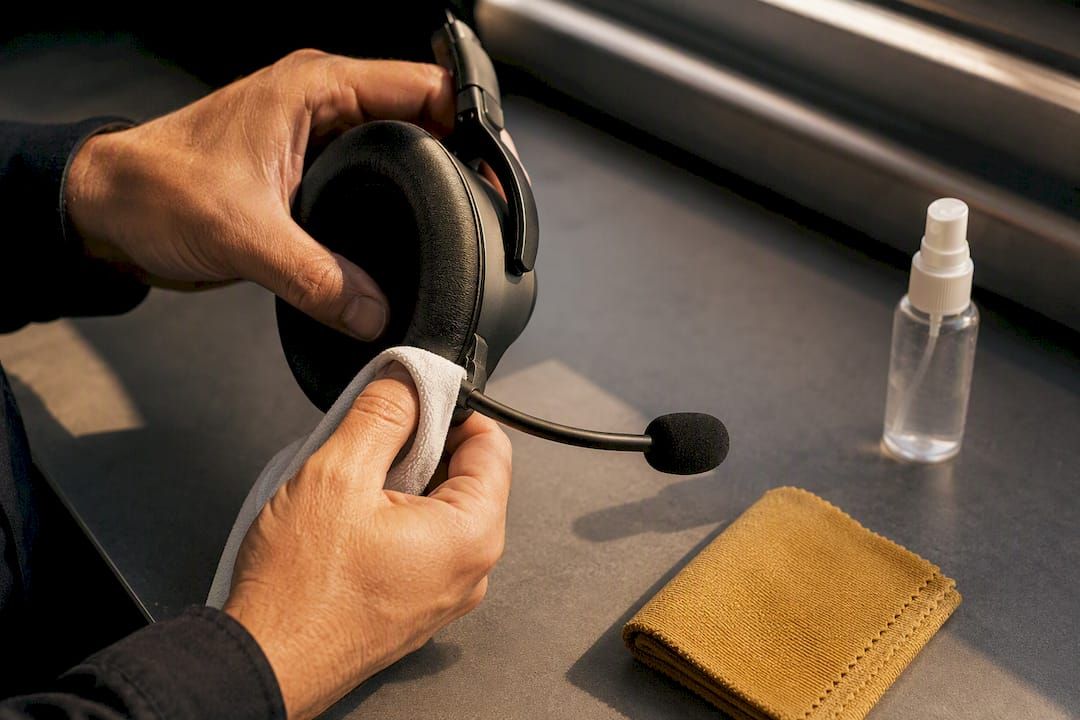
Pro Tip: Ask whether headsets are sanitized between flights and whether your phone or camera mic will pick up the intercom audio if you plan to record video. Some systems bleed static into recordings.
What Should You Expect During the Flight and Narration?
A typical scenic flight follows a predictable rhythm, and knowing it in advance helps you relax into the experience instead of wondering what’s next.
- Check-in and weight confirmation. Staff may ask your weight for balance purposes, sometimes with allowances for clothing and gear.
- Safety briefing can include mandatory instructions much like those described in the Life Jackets on Boats: U.S. Safety and Legal Guide. This covers seatbelts, doors, and emergency procedures, entirely separate from sightseeing content.
- Headset fitting and audio check. You’ll confirm you can hear the intercom before takeoff.
- In-flight narration begins, once the aircraft is stable and climbing.
- Photo stops or slow passes over major landmarks, where commentary often pauses so you can shoot.
- Return descent, where pilots frequently go quiet again to focus on landing.
Commentary naturally cuts out during takeoff, landing, and radio calls to air traffic control because pilot attention has to go to flying first. Prerecorded tracks handle these gaps more smoothly since they’re scripted to skip dead air, while live pilots simply resume once workload drops. If interaction matters to you, ask at booking whether the pilot takes questions mid-flight or waits until landing, and confirm photo-stop policy so you know when to expect quiet stretches with your camera up. Reading a destination guide like what to wear on a helicopter tour beforehand also helps you plan gear without adding unexpected weight.
Are Helicopter Tours Available in Multiple Languages?
Language coverage depends heavily on your destination’s tourist volume. Busy international routes, Niagara Falls, major theme park cities, coastal resort towns, often carry prerecorded tracks in five or more languages, selectable by channel before takeoff. Smaller regional operators may only offer English, with a pilot doing their best in a second language if asked ahead.
Accessibility options exist but aren’t universal:
- Some operators provide printed transcripts for passengers with hearing difficulties.
- Private charters can arrange a translator or bilingual pilot on request.
- A handful of companies offer downloadable audio files so you can follow along on your own device before or after the flight.
If you need a specific language or an accessibility accommodation, ask when you book, not when you arrive. Confirming in advance is far easier than hoping the day-of desk can accommodate you.
Why Do Safety Rules Limit What Pilots Say In Flight?
Pilot workload comes first, always. The Federal Aviation Administration’s guidance on safety in and around helicopters emphasizes that the pilot in command is responsible for safe operation, which is exactly why mandatory safety briefings stay separate from, and take priority over, sightseeing commentary.
Weight and balance calculations, drawn from the FAA’s Helicopter Flying Handbook, account for passenger weight, baggage, and fuel, often with allowances added for clothing and equipment like camera gear. That’s why check-in sometimes includes a weight question and a seating adjustment before boarding even begins.
Preflight walk-arounds and boarding procedures follow similarly strict, distraction-free protocols under industry safety guidance from groups like the U.S. Helicopter Safety Team. None of that is narration, and none of it should be rushed to get to the fun part. Prerecorded audio actually solves a real problem here: it keeps commentary flowing during radio calls or turbulence without adding a single task to the pilot’s plate.
How Do You Choose a Tour Based on the Narration You Want?
Run through this checklist before you book, ideally on the phone with the operator rather than guessing from a website description.
- Is narration live, prerecorded, or a hybrid of both?
- Can you ask the pilot questions mid-flight, or only after landing?
- What audio system is used, aviation headsets, phone app, or in-seat speakers?
- Are headsets sanitized between groups?
- What languages are available, and can you get a downloadable track in advance?
- Is this a shared tour or a private charter, and does that change the narration style?
Shared tours usually mean prerecorded or minimal live commentary since the pilot is managing multiple passengers with different interests. If a running conversation with your pilot matters to you, a private tour is almost always the better fit.
Pro Tip: If photography is your main goal, ask specifically about doors-off availability and whether that setup changes the headset or narration format. Wind noise on doors-off flights sometimes trims commentary to bare essentials.
How Helicopterstour Verifies Narration and Audio Claims
Helicopterstour.com checks that operators hold FAA certification and cross-references thousands of traveler reviews to see whether advertised audio systems match what passengers actually experienced. Justin’s tour recaps note real details, whether commentary was live or prerecorded, how headsets sounded, and if photo stops lined up with narration. Before booking, scan a listing’s review section specifically for mentions of headset quality or pilot chattiness. It’s a fast way to confirm narration claims before you commit.
When Should Narration Style Actually Change Your Booking?
If interaction matters most, book live commentary or go private. If you need reliable language coverage, prerecorded audio wins. If photos are the priority, confirm doors-off availability and headset type before anything else.
— Justin
Find Tours Matched to the Narration Style You Want
This platform helps travelers understand what audio setup, language options, and pilot style to expect before booking. Listings typically identify the operator’s certification status and commentary style, whether live, scripted, or minimal.

Start by browsing helicopter tour reviews by destination to filter for private versus shared formats and see which operators mention multilingual audio or downloadable tracks. If you’re weighing whether a shared flight or a private charter fits your need for interaction, that comparison lays out the trade-offs plainly. For a first-timer’s rundown of the full flight sequence, from check-in to headset fitting, read what to expect on a helicopter tour before you search tours in your destination.
Where to Read More on Safety and Narration
For regulatory background, see the FAA’s Advisory Circular 91-32B and Helicopter Flying Handbook. For operator-specific narration notes, browse helicopter tour safety guidance on Helicopterstour.com.
Sources
- AC 91-32B: Safety In and Around Helicopters
- Helicopter Ride Price: What You’ll Really Pay in 2025
- Fort Lauderdale 20-minute helicopter tour review
FAQ
How Much Does a 20 Minute Helicopter Ride Cost?
Most shared scenic helicopter tours run roughly $150 to $600 per person for flights between 12 and 30 minutes, depending on location and aircraft. Private charters cost significantly more and are typically priced by the hour rather than per seat.
What Does a Helicopter Tour Pilot Or Guide Earn?
Pay varies widely by region, aircraft type, and whether the pilot works for a large sightseeing operator or a small charter company, and no single verified industry figure applies universally. Experienced tour pilots typically earn more than entry-level commercial pilots due to the specialized flying skills required for low-altitude sightseeing routes.
What Should You Expect on a Helicopter Tour?
Expect a check-in and safety briefing first, followed by headset fitting, then narration once the aircraft is stable in the air. Commentary, live or prerecorded, often pauses during takeoff, landing, and photo stops, which is normal and tied to pilot workload rather than a problem with the flight.
Do They Weigh You Before Helicopter Rides?
Many operators do ask for passenger weight at check-in, since FAA weight and balance guidance requires accounting for passengers, baggage, and fuel. This can affect seating assignments, so it helps to disclose camera gear or heavy bags honestly rather than let the crew discover it at boarding.
Recommended
- How to Book a Helicopter Tour on Viator and reserve today!
- What to Wear on a Helicopter Tour: Clothing, Camera, Comfort Tips
- Best Helicopter Tours for First-Time Flyers: What to Expect and How to Prepare