

Helicopter tours are generally safe when you book with a certified, audited operator, but the industry’s rare accidents cluster around specific, identifiable causes. The signals worth checking before you fly are simple: Part 135 certification, membership in the Tour Operators Program of Safety, a published weather and cancellation policy, and a clean look at NTSB investigation records. None of that guarantees a perfect flight, but it separates operators who take safety seriously from ones who don’t.
TL;DR:
- Most accidents are linked to weather issues, pilot workload, or maintenance lapses, emphasizing the need to verify operator safety protocols and aircraft conditions.
- Operators certified under Part 135 and participating in safety programs like TOPS or IS-BAO demonstrate higher safety standards than those solely following legal minimum requirements.
- Asking about the operator’s weather cancellation policies, pilot experience, aircraft retrofit, and maintenance practices before booking can significantly reduce your risk exposure.
- Helicopter tours over water or remote terrain benefit from twin-engine aircraft and crash-resistant fuel systems, especially on older models, to improve safety margins.
- Most sightseeing helicopters lack flight data recorders, making accident investigations slower, which underscores the importance of choosing operators with proven safety records and transparent practices.
Table of Contents
- Helicopter Tour Safety: What the Accident Data Actually Shows
- The Regulatory Framework: What Part 135 and TOPS Actually Mean
- How the Best Operators Actually Reduce Risk
- Your Pre-Booking Checklist: Questions to Ask Before You Fly
- On-Tour Safety: What to Expect From Boarding to Landing
- How Helicopterstour Verifies Operators Before You Ever See a Listing
- Helicopter Maintenance Schedules and What Inspections Actually Catch
- Does the Helicopter Model Change the Risk Profile?
- Who Actually Enforces the Rules?
- Insurance: What’s Actually Covered When You Book a Tour
- Medical and Fitness Considerations Before You Fly
- Author Perspective: Being Informed Beats Blanket Avoidance
- Book With Confidence Through Helicopterstour
- Sources
- FAQ
Helicopter Tour Safety: What the Accident Data Actually Shows
Sightseeing helicopter crashes are statistically rare, but when they happen, they tend to make headlines because the fatality rate per incident runs high compared to fixed-wing commercial aviation. Investigative reporting on the 2025 Hudson River sightseeing helicopter crash reignited scrutiny of an industry that had already drawn attention for a string of incidents in tourist-heavy markets. The New York Times has documented clusters of fatal sightseeing crashes in locations like Hawaii and New York, prompting renewed calls for tighter oversight.
A few causal factors show up again and again in NTSB casework:
- Weather, specifically pilots flying under Visual Flight Rules who inadvertently enter Instrument Meteorological Conditions, is the leading contributor to fatal sightseeing accidents.
- Pilot workload spikes when the pilot also acts as tour guide, narrating the flight while managing controls and airspace.
- Mechanical or maintenance lapses appear less frequently but carry outsized consequences when they occur.
- Doors-off tours introduce unique risks tied to harness failure and passenger movement.
CNN’s reporting adds a detail many passengers don’t know: most sightseeing helicopters lack flight data recorders, the “black boxes” standard on commercial airliners, which makes post-accident investigation harder and slower. That gap is one reason NTSB findings sometimes take months to conclude, and it’s part of why regulators have faced pressure to modernize tour-specific rules.
The Regulatory Framework: What Part 135 and TOPS Actually Mean
Not every sightseeing operator flies under the same rules, and the distinction matters more than most passengers realize.
Operators certified under Part 135 of federal aviation regulations must meet stricter pilot training, maintenance, and operational oversight requirements than those flying under Part 91, which governs general aviation and imposes lighter regulatory burden. The e-CFR codifies these distinctions under 14 CFR Part 136, which specifically addresses air tour operations.
Beyond federal certification, two voluntary programs act as a second layer of scrutiny:
- Tour Operators Program of Safety (TOPS): an industry safety program that subjects member operators to external audits covering flight operations, maintenance records, pilot experience, and even heliport conditions, according to Travel Weekly.
- International Standard for Business Aircraft Operations (IS-BAO): a globally recognized audit standard that some tour operators adopt to demonstrate operational maturity beyond the legal minimum.
You can verify an operator’s certificate status through the FAA’s CAROL database, and you can search open and closed NTSB investigations by aircraft registration or location for free.
How the Best Operators Actually Reduce Risk
Certification is the floor, not the ceiling. The operators worth booking go well beyond what regulation strictly requires.
Pilot experience matters enormously. Reputable operators recruit pilots with substantial rotorcraft hours and route-specific familiarity, then run them through recurrent check rides on a fixed schedule rather than the regulatory minimum. That routine catches skill decay before it becomes a problem in marginal weather.
Maintenance culture is the second lever. Helicopters certified after 1994 are required to carry crash-resistant fuel systems, and Travel Weekly notes that operators who retrofit older aircraft with this technology are signaling a safety commitment that goes beyond the legal bar. Asking about fleet age isn’t a paranoid question. It’s a fair one.
Weather protocol separates the operators worth trusting from the ones chasing revenue. The best ones give pilots unilateral authority to cancel or divert without needing sign-off from a manager who’s thinking about the day’s bookings. Layered on top of that, many now run formal Safety Management Systems that track near-misses and maintenance trends over time instead of reacting only after something breaks.
Your Pre-Booking Checklist: Questions to Ask Before You Fly
Run through this before you hand over a credit card number, whether you’re booking online or calling the operator directly.
- Confirm the certification. Ask directly whether the flight operates under Part 135, and whether the operator holds TOPS or IS-BAO membership.
- Ask about the aircraft. Get the model, approximate year, and whether it has a crash-resistant fuel system.
- Request the weather policy in writing. A operator with a clear, published cancellation policy has nothing to hide about how it handles marginal conditions.
- Ask about pilot route experience. A pilot flying the same canyon or coastline for years brings judgment a newcomer simply hasn’t built yet.
- Clarify manifest and insurance practices. Ask how passenger weight and headcount are tracked, and whether the operator carries liability coverage beyond the legal minimum.
Pro Tip: If an operator hesitates or gets vague when you ask about weather cancellations, treat that as a red flag rather than a shrug. Trusted advisors and safety auditors consistently rank a clearly published weather policy above marketing language when judging operator quality.
Evasive answers, pressure to fly despite questionable conditions, or a flat refusal to discuss safety credentials are all reasons to book elsewhere, no matter how good the photos on their website look.
On-Tour Safety: What to Expect From Boarding to Landing
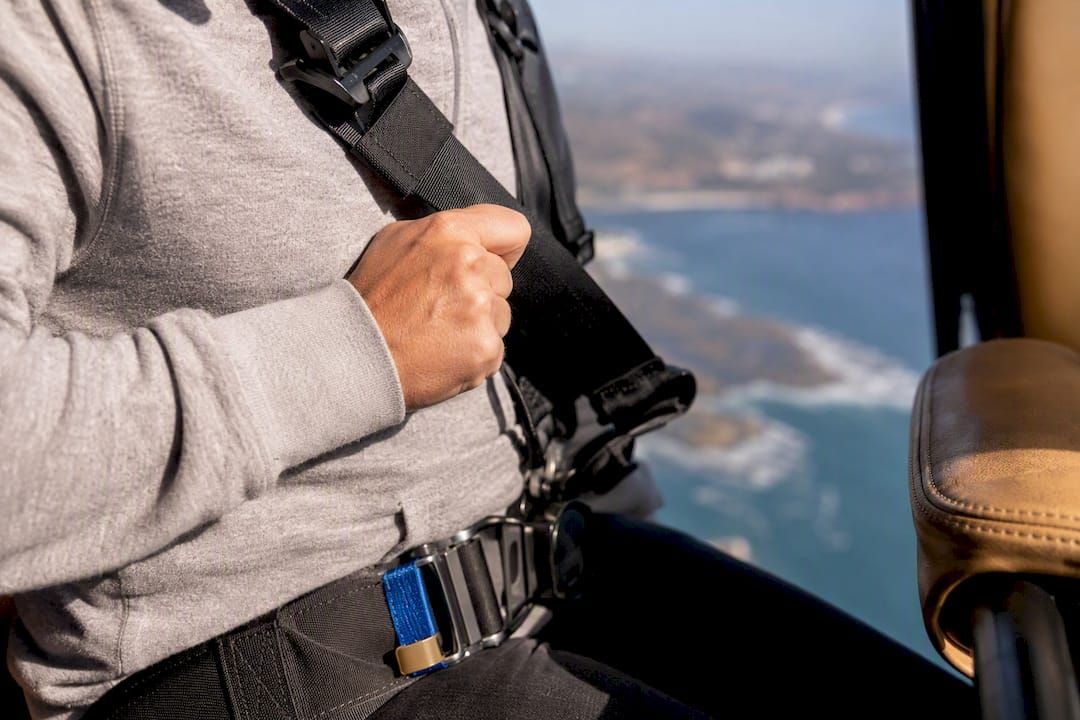
A thorough safety briefing before takeoff covers seatbelt and harness operation, emergency exit locations, and what to do if the pilot calls for an unplanned landing. Pay attention here even if you’ve flown before. Aircraft differ, and exit mechanisms aren’t always intuitive under stress.
- Keep your harness or seatbelt fastened for the entire flight, not just takeoff and landing.
- Secure loose items like phones and hats before boarding. A dropped object can jam a control or become a hazard on a doors-off flight.
- On doors-off tours, follow the harness protocol exactly and avoid unnecessary movement or leaning; this is where restraint failure poses the most direct risk.
- Board and exit only when the pilot or ground crew signals it’s safe, keeping clear of the tail rotor at all times.
- If you feel unwell or notice something concerning mid-flight, tell the pilot immediately using the headset intercom rather than waiting until landing.
How Helicopterstour Verifies Operators Before You Ever See a Listing
Sorting real safety signals from marketing copy is exhausting when you’re comparing dozens of operators across a destination. Helicopterstour built its review process specifically around that problem, cross-checking FAA certification status and safety history before a tour ever appears on the site.
Every listing in the collection of 1,000-plus reviewed tours gets weighed against operator safety criteria alongside scenery and customer feedback, which is part of how the platform maintains a 4.9-star average across tens of thousands of aggregated traveler reviews. Instead of running the pre-booking checklist yourself against a dozen browser tabs, you can filter listings that have already passed a safety-informed review.
Helicopter Maintenance Schedules and What Inspections Actually Catch
Every commercial helicopter operating under Part 135 follows an FAA-approved inspection program, typically structured around flight hours rather than calendar time. Components get inspected, serviced, or replaced at intervals tied to their specific wear profile, not a generic “annual checkup” model borrowed from car ownership.
Rotor systems, engine components, and drivetrain parts each carry their own inspection intervals, some measured in dozens of flight hours and others in hundreds. A helicopter that flies six 20-minute tours a day accumulates hours fast, which means a sightseeing aircraft can hit major inspection milestones far more frequently than a private helicopter that flies occasionally.
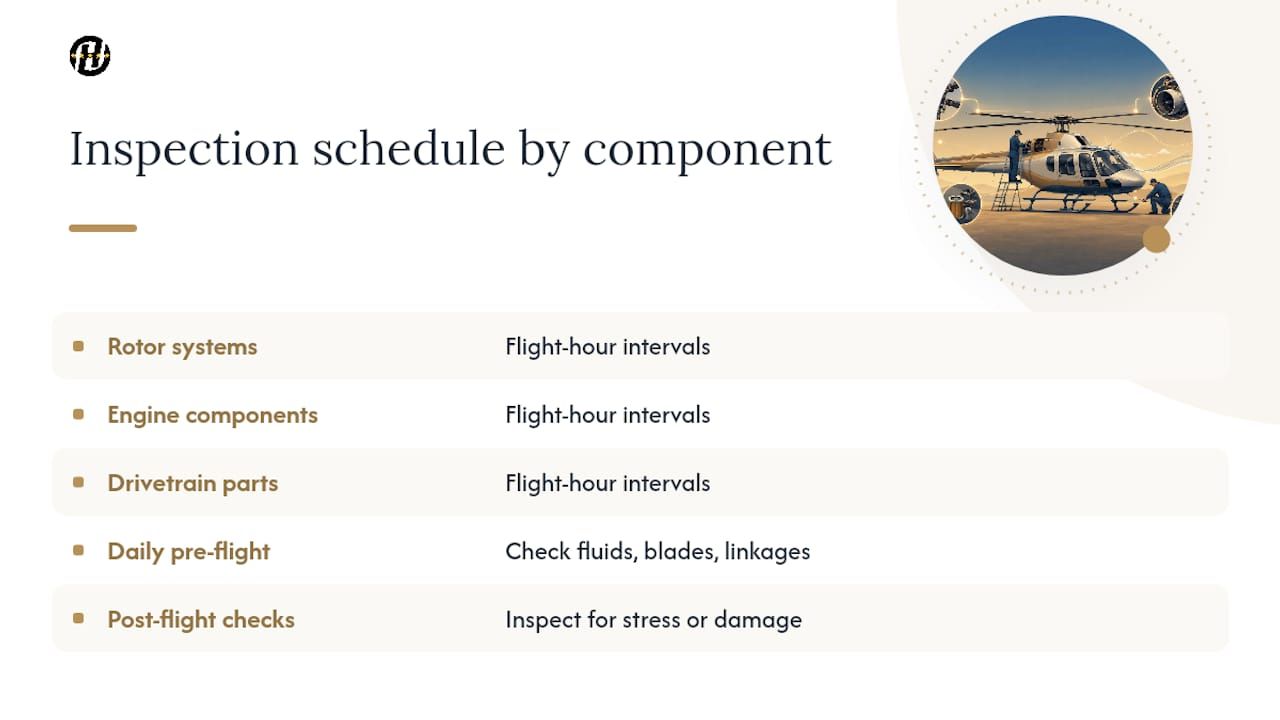
Operators also run daily pre-flight inspections that check fluid levels, blade condition, and control linkages before the first flight of the day, and post-flight checks that catch anything the last flight might have stressed. Maintenance logs are required documentation under Part 135, and while passengers can’t demand to see them on the spot, an operator’s willingness to discuss its maintenance program in general terms is itself a useful signal.
The gap between a well-maintained fleet and a neglected one rarely shows up in a brochure. It shows up in how directly an operator answers questions about fleet age, retrofit history, and inspection intervals. Operators proud of their maintenance record tend to volunteer details unprompted.
Does the Helicopter Model Change the Risk Profile?
Tour operators fly a range of aircraft, from smaller piston-engine helicopters used for short scenic hops to larger, twin-engine turbine aircraft used on longer routes over water or remote terrain. The model matters more than most passengers assume.
Single-engine helicopters make up the bulk of the sightseeing fleet because they’re cost-effective for short flights, and they’re perfectly safe within their design limits. Twin-engine aircraft add a genuine safety margin for tours that cross open water or fly over terrain without an easy emergency landing spot, since a single-engine failure doesn’t mean total loss of power.
Aircraft age and retrofit status matter as much as engine count. As noted earlier, helicopters certified after 1994 must carry crash-resistant fuel systems, a design feature that measurably reduces post-crash fire risk. Older airframes that haven’t been retrofitted lack that protection, which is exactly why asking about aircraft year during booking isn’t a trivial question.
Cabin configuration also affects risk in specific tours. Doors-off flights, popular for unobstructed photography, remove a physical barrier between passenger and open air, shifting more of the safety burden onto harness integrity and passenger discipline. A doors-on tour in the same aircraft carries a meaningfully different risk profile for the same route.
Who Actually Enforces the Rules?
Federal oversight for tour operators runs primarily through the Federal Aviation Administration, which issues and can suspend or revoke Part 135 certificates, conducts surveillance inspections, and investigates complaints. That enforcement power is real: an operator with repeated violations can lose the certificate that lets it fly commercially at all.
The National Transportation Safety Board plays a different role. It doesn’t regulate or certify anyone. Instead, it investigates accidents after the fact and issues findings and safety recommendations that the FAA can choose to adopt into binding rules. The Hudson River crash investigation is a case in point: NTSB findings from incidents like this have historically driven changes to operational rules for tour operators, even though the board itself can’t force an operator to comply.
Voluntary programs like TOPS and IS-BAO add a layer enforcement agencies don’t provide: recurring third-party audits with real consequences for membership if an operator fails to maintain standards. That combination of legal enforcement and voluntary peer accountability is why operators who participate in both tend to rank higher with safety-focused travel advisors, according to Travel Weekly’s reporting on independent safety programs.
Insurance: What’s Actually Covered When You Book a Tour
Commercial helicopter operators are required to carry liability insurance as a condition of their Part 135 certificate, which covers passengers in the event of an accident during a legitimately operated commercial flight. That baseline coverage exists whether or not you buy anything extra.
Where things get more nuanced is what that baseline insurance actually pays out, and how quickly. Liability coverage typically compensates for injury or death resulting from operator negligence, but it doesn’t cover things like trip cancellation, medical evacuation costs unrelated to the flight itself, or your own medical bills if your personal health insurance has gaps for travel-related incidents.
Travel insurance purchased separately can fill some of those gaps, particularly for trip cancellation if a tour gets scrubbed for weather (a good reason to book with an operator that has a written cancellation policy) or for supplemental medical coverage while traveling internationally. If you’re booking a tour abroad, check whether your health insurance covers care in that country at all; many domestic plans don’t.
It’s worth asking an operator directly what their liability coverage includes rather than assuming it matches airline-level protections. Sightseeing helicopter insurance markets and coverage limits can vary by operator size and jurisdiction, and a written answer is more useful than a verbal reassurance.
Medical and Fitness Considerations Before You Fly
Most healthy adults and children face no medical barrier to a standard helicopter tour, but a few conditions deserve honest self-assessment before you book.
Pregnant travelers, people with recent ear or sinus surgery, and those with severe anxiety around enclosed or high-altitude spaces should talk to a doctor beforehand, particularly for tours that involve rapid altitude changes or doors-off configurations. Motion sensitivity is worth considering too. Helicopters bank and hover differently than fixed-wing aircraft, and turbulence over mountainous terrain can catch first-time flyers off guard.
Weight and mobility matter for practical, not judgmental, reasons: operators calculate weight and balance precisely, and manifest weight limits exist for real aerodynamic purposes, not as an arbitrary policy. If you or a member of your party uses mobility aids, call ahead so the operator can plan boarding accordingly. Families flying with young children should also check the operator’s age and weight minimums, since these vary by aircraft and route.
If you have a condition that makes rapid evacuation or sustained physical exertion difficult, mention it when booking. A good operator will tell you plainly whether a specific tour is a good fit rather than just taking your payment and hoping it works out.
Author Perspective: Being Informed Beats Blanket Avoidance
Refusing to fly out of vague anxiety skips the more useful move: learning what actually predicts risk. Skip a tour if you’re dealing with a real health concern the operator hasn’t addressed, if weather is genuinely marginal and the operator seems reluctant to cancel, or if basic safety questions get evasive answers. Otherwise, the data supports flying with confidence. Most tours operate safely, and due diligence is what tips the odds further in your favor.
— Justin
Book With Confidence Through Helicopterstour
Running the full checklist yourself, operator by operator, across a dozen browser tabs is exactly the kind of tedious work Helicopterstour exists to eliminate. Every one of the 1,000-plus tours in the collection has already been checked against safety criteria alongside scenery and traveler satisfaction, so the vetting this article just walked you through has largely been done before you even land on a listing.

That verification is reflected in the platform’s aggregated 4.9-star average across thousands of traveler reviews, and it means you can filter for safety-conscious operators without cold-calling each one to ask about Part 135 status. If you’re weighing whether to book a private flight or share a cabin with strangers, the private versus shared tour comparison walks through the trade-offs. When you’re ready, browse Helicopterstour’s reviewed tours and apply the checklist from this article directly to a shortlist that’s already been through a safety-informed review.
Sources
The NTSB’s monthly investigation listings are the primary record for confirmed accident data and ongoing investigations. The e-CFR’s Part 136 air tour regulations lay out the actual certification requirements referenced throughout this piece. Travel Weekly’s reporting on operator safety programs, the New York Times’ coverage of sightseeing tour regulation, and AP News’ reporting on the Hudson River crash provide the incident context and industry response cited above.
- How Safe Are Helicopter Sightseeing Tours? – The New York Times
- Finding safer helicopter tours – Travel Weekly
- NTSB monthly investigation listings
- e-CFR: 14 CFR part 136 (air tours) and related sections
- Hudson River crash raises questions about New York’s helicopter tours – AP News
FAQ
Is it safe to go on a helicopter tour?
Yes, generally, when the operator holds Part 135 certification and ideally belongs to a program like TOPS or IS-BAO. Serious accidents are rare relative to the volume of flights conducted each year, but they aren’t zero, which is why verifying credentials before booking matters.
How risky is helicopter travel compared to other ways to travel?
Helicopter sightseeing carries a higher per-flight risk profile than commercial airline travel, largely because of factors like variable weather exposure, shorter routes at lower altitude, and, per CNN’s reporting, the absence of flight data recorders on most sightseeing aircraft. It remains safer, statistically, than many everyday activities like driving.
What is the fatal crash rate for helicopter tours in Hawaii?
There’s no single, current, publicly agreed rate. NTSB and press investigations have documented a disproportionate cluster of fatal sightseeing accidents in Hawaii over the years, which is why the location draws recurring regulatory attention.
What are the disadvantages of a helicopter tour?
Beyond cost, the main drawbacks are weather-dependent cancellations, strict weight and manifest limits, and limited flight duration compared to other aerial experiences. Doors-off configurations, while popular for photography, also introduce added risk that doors-on flights don’t carry.
How can I quickly check if a helicopter tour operator is safe?
Ask whether the flight runs under Part 135, whether the operator holds TOPS or IS-BAO membership, and request their written weather policy. Platforms like Helicopterstour pre-screen these safety criteria across their listed tours, which shortcuts the process considerably.