

Yes, most helicopter tour operators let infants under 24 months fly as lap children, following the same convention federal aviation guidance sets for commercial flights. But policies on restraints, car seats, and pricing vary by operator, so call ahead before you book. If you want extra peace of mind, ask about buying your infant a separate seat.
TL;DR:
- Most helicopter operators allow infants under 24 months to fly as lap children, but policies on restraints, fees, and seats vary significantly between companies.
- Car seats are rarely compatible due to helicopter seat design, and most operators require written confirmation if bringing one for safety and proper installation.
- Noise levels and inadequate headset fit make bringing certified infant hearing protection highly recommended for safety and comfort.
- Booking a private flight often provides more space and flexibility for managing infants at a higher but sometimes worthwhile cost.
- Asking detailed, specific questions about restraints, age policies, and headset availability before booking helps ensure safety and avoid surprises on the day of the flight.
Table of Contents
- What FAA Guidance Says About Lap Infants (And How Operators Interpret It)
- How Infants Are Restrained, and Why Car Seats Rarely Fit
- Preparing for the Flight: A Pre-Departure Checklist
- How Lap Infant Pricing Actually Works
- What to Expect on Flight Day With a Baby in Tow
- The Right Questions to Ask Before You Book
- What Parents Actually Experience on These Flights
- The Safest Approach Isn’t Always the Cheapest One
- Book With Confidence Through Helicopterstour
- Sources
- FAQ
What FAA Guidance Says About Lap Infants (And How Operators Interpret It)
The FAA’s guidance on child restraint systems sets the baseline every operator works from: children under 24 months can generally fly as lap children, while kids 24 months and older need their own seat. That’s the rule of thumb across commercial aviation, and most helicopter tour companies apply it the same way, even though helicopters aren’t covered by the exact same regulations as airline flights.
Where things get inconsistent is in the details. Some operators treat lap infants as completely free passengers with zero fees attached. Others offer a discounted fare if you bring a car seat and the child occupies their own space. A few require every passenger, infant or not, to count toward the aircraft’s total weight and seating capacity, which can affect pricing even when the child doesn’t need a ticket.
You’ll typically see language like this on an operator’s website:
- “Children under 2 fly free as lap infants; no separate seat required.”
- “Infants must be held by an adult at all times during flight.”
- “Car seats may be permitted on select aircraft; contact us in advance to confirm.”
- “Children 24 months and older require a full-fare seat, regardless of size.”
The Corporate Helicopters FAQ is a solid real-world example of this kind of policy in action. It states that infants under 24 months may fly as lap children, recommends bringing ear protection for the baby, and notes that some pricing structures shift if a car seat is involved. That’s fairly representative of what you’ll find across the industry, so treat it as a template for the kinds of questions you should be asking your own operator.
How Infants Are Restrained, and Why Car Seats Rarely Fit
Helicopter cabins are tight, and their seat geometry wasn’t designed with car seats in mind. Even when an operator says they “allow” a child restraint system, that approval has to happen in advance and in writing. Most helicopter seats lack the anchor points, LATCH systems, or seatbelt configurations that car seats need to install safely, so bringing one without confirming compatibility first is a wasted trip to the heliport.
For lap infants, the standard setup is a supplemental lap belt or harness that loops around the adult’s seatbelt, holding the child snug against the caregiver’s body during taxi, takeoff, and landing. Some operators use their own proprietary attachment systems built into the aircraft. Ask specifically what your operator uses. “We’ll figure it out” isn’t the answer you want to hear.
Noise is the other safety consideration parents underestimate. Helicopter cabins produce rotor and engine frequencies that can register at levels uncomfortable for adult ears, let alone an infant’s developing hearing. Standard adult headsets almost never fit a baby’s head properly, which means they often provide little real protection. Bringing certified infant hearing protection, the same kind pediatricians recommend for airshows or loud events, is one of the cheapest and most effective steps you can take before boarding.
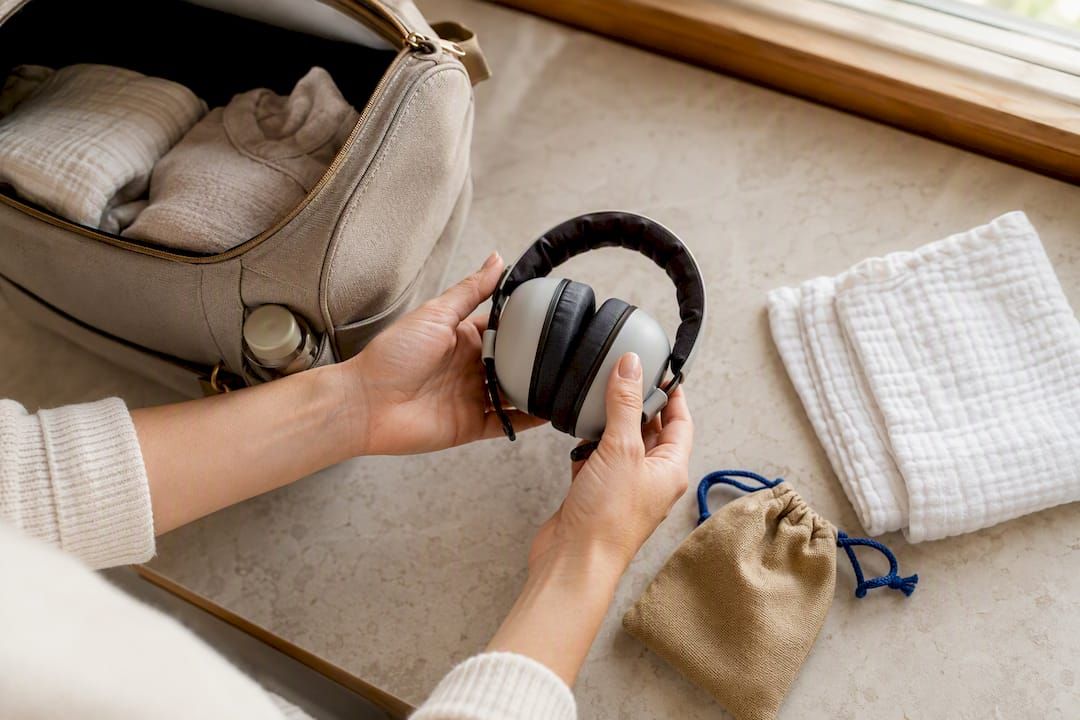
Pro Tip: Pack infant ear protection in your diaper bag the night before, not the morning of. Fitted models need a few minutes of adjustment, and you don’t want to be fumbling with straps while a rotor is already spinning.
If your child is close to 24 months, or you simply want more room and a proper harness, buying a separate seat often removes the guesswork entirely. For families who want the safety margin without a fight over “is this technically required,” the extra cost is frequently worth it.
Preparing for the Flight: A Pre-Departure Checklist
A five-minute phone call before booking saves most families from day-of surprises. Ask about minimum age policies, exactly how infants are restrained, whether infant-sized headsets are available, and whether a private flight is an option for your family.
Pack these items before you leave the house:
- Certified infant hearing protection, sized for your baby, not a scaled-down adult set.
- A compact car seat, only if the operator has confirmed in writing that it’s compatible.
- Diapers, wipes, and a small snack or bottle in case of delays.
- Proof of your child’s age, since some operators ask for it at check-in.
Timing matters more than most parents expect going in. Scheduling around your infant’s nap window, choosing a calmer time of day, and dressing your baby in layers for cabin temperature swings all reduce the odds of a mid-flight meltdown. The FAA Safety Team’s course materials on family-oriented preflight briefings echo this same point: preparation before departure, not during boarding, is what keeps young passengers calm and safe.
How Lap Infant Pricing Actually Works
Most operators price lap infants one of three ways: free with no seat, a discounted fare if the child occupies a purchased car seat, or full fare once the child hits 24 months regardless of size. Travel guides covering family helicopter tours in New York City note that pricing and route options vary enough between operators that comparing more than one before booking is worth the extra ten minutes.
Some tours explicitly spell this out in their terms. A Sydney Harbour helicopter tour listing, for example, notes that children under 2 fly free but may require a private booking rather than joining a shared flight. That private/shared distinction matters more than most first-time bookers realize.
Before you commit, check for:
- Headset rental fees, especially infant-sized units if the operator stocks them.
- Minimum passenger surcharges that kick in in on lower-occupancy flights.
- Cancellation and rescheduling terms, since infants get sick or nap through your window more often than adults do.
- Whether a private flight costs meaningfully more than a shared seat, and whether that gap is worth it for your family’s comfort.
Private flights tend to give families more room to manage a fussy or wiggly infant without disrupting other passengers, and many parents find that flexibility alone justifies the higher price. If you’re weighing the two options, Helicopterstour’s breakdown of private versus shared tours walks through the trade-offs in more depth.
What to Expect on Flight Day With a Baby in Tow
Arrive earlier than you think you need to. Most operators want infant passengers checked in and settled before the standard boarding window, partly for weigh-ins and partly to handle the safety briefing without rushing.
Once you’re at the gate:
- Staff will typically walk you through how to secure your lap infant using the supplemental belt or harness system before taxi.
- Expect a short, plain-language safety briefing covering brace positions and what to do if the baby needs to be repositioned mid-flight.
- Doors-off flights and open-window photography setups are generally not recommended with infants aboard. If photography is part of the tour, ask in advance how staff handle it when a baby is on board.
- Boarding with a stroller usually means checking it curbside, so plan for a baby carrier or someone to hold your child during the walk to the aircraft.
The Right Questions to Ask Before You Book
A short phone call, done right, tells you almost everything you need to know:
- What’s your minimum age policy for lap infants, and does it change during peak season?
- What restraint or harness system do you use for lap children specifically?
- Do you offer infant-sized headsets, or should we bring our own hearing protection?
- Is a private flight available, and how does pricing compare to a shared seat?
- What’s your cancellation policy if our infant is sick or overtired on flight day?
The strongest operators answer all five without hesitation. Look for FAA-certified companies, a clearly written infant policy on their website, and staff who sound like they’ve handled babies before, not just adults.
Pro Tip: If an operator gives you a vague answer about restraints, that’s a signal to keep calling around. A company confident in its child-safety setup will describe it in specific, concrete terms without prompting.
Vague or dismissive answers about how infants are secured, or outright refusal to discuss it, are red flags worth walking away from.
What Parents Actually Experience on These Flights
Traveler reports consistently point to a few themes that don’t always make it into official FAQ pages: morning flights tend to produce calmer babies than midday or afternoon slots, cabin space is tighter than most first-timers expect, and headset fit for infants is hit-or-miss even at operators that claim to stock them.
That kind of detail rarely shows up until you’ve already boarded, which is exactly why forums and traveler reports matter alongside official policy pages. Helicopterstour cross-checks operator claims against FAA certification records and aggregates traveler feedback specifically to catch gaps like this before families book. If a tour’s family-friendliness rating looks off compared to its written policy, that mismatch is usually the reason.
The Safest Approach Isn’t Always the Cheapest One
A free lap infant seat is reasonable for a short, calm flight with a young baby and a confirmed harness system. Once your child is closer to 24 months, more active, or you simply want room to maneuver, paying for a seat stops being a luxury and starts being the more sensible option.
Calling the operator directly and leaning toward private flights removes most of the stress families report after the fact. Comparing family-friendly tour options before you commit beats discovering a restraint gap once you’re already at the heliport.
— Justin
Book With Confidence Through Helicopterstour
The site helps reduce the effort of calling multiple operators by providing information on family-friendly policies, FAA certification, and traveler feedback so you can compare private versus shared pricing and infant policies before contacting operators.

If you’re planning a trip to New York, the top family-friendly helicopter tours in the city are a good place to start comparing routes and pricing side by side. Once you’ve settled on an operator, booking through Viator takes just a few minutes, and if you need ground transportation to the heliport, airport transfer services can handle that leg of the trip so you’re not managing a stroller and a car seat on public transit. Start browsing verified, family-rated tours at Helicopterstour and book the flight that fits your infant’s schedule, not just your own.
Sources
- Does the FAA require children on commercial flights to be in child restraint systems (CRS)?
- Choosing the best helicopter tour in New York City: Family high-flying adventures — New York Family
- FAA Safety Team course materials
FAQ
Can my 2 year old fly free on my lap?
Generally no. Most operators follow the FAA’s convention that lap-child status ends at 24 months, so a 2 year old usually needs a purchased seat, though exact policies vary by operator.
Can a 2 year old go on a helicopter tour?
Yes, a 2 year old can fly, but expect to pay for a seat rather than fly them as a free lap passenger, since most operators require a purchased seat once a child turns 24 months.
Can I fly with a 1-year-old on my lap?
Yes, in most cases. A 1 year old typically qualifies as a lap infant under standard operator policy, though you should still confirm the specific harness or restraint system your operator uses before booking.
What is the hardest age to fly with a baby?
Many parents and operators report that mobile toddlers, typically under 24 months old, tend to be the most challenging age group for helicopter tours, since they’re too active to stay still but not yet able to follow safety instructions reliably.
Recommended
- Are Helicopter Tours Worth It for Families and Kids? Safety, Age Limits and Tips
- Helicopter Tour Safety: Are Helicopter Tours safe?
- Best Helicopter Tours for First-Time Flyers: What to Expect and How to Prepare
- What to Expect on a Helicopter Tour: Before, During, and After