


Hey there, I’m Justin. After reviewing helicopter tours across dozens of destinations worldwide, people constantly ask me the same question: what actually separates the truly great flights from the merely pleasant ones? It’s not altitude, and it’s rarely the aircraft. The best helicopter tour destinations share a specific set of traits — genuine inaccessibility, visual complexity, iconic landmarks, and reliable safety records among them — and once you know what to look for, you can spot a genuinely scenic helicopter tour from a mediocre one before you ever book a seat. This guide breaks down exactly how to choose a helicopter tour destination worth your money, using real examples from the world’s most celebrated flights, and by the end you’ll have a clear checklist for evaluating any scenic helicopter tour before you book it.
Key Takeaways
- The single biggest factor is genuine inaccessibility — terrain you truly cannot reach by road, trail, or boat.
- Great destinations reveal visual complexity from the air that isn’t visible at ground level, not just more distance covered.
- Recognizable landmarks (Everest, the Grand Canyon, the Na Pali Coast) carry weight because people already want to see them from a new angle.
- A destination’s safety infrastructure — certified operators and regulated airspace — matters as much as its scenery.
- Time savings over ground travel, reliable weather, and a mature market of competing operators round out what makes a destination worth flying.
Jump to a Section
Genuine Inaccessibility Is the #1 Factor
Every one of the best helicopter tour destinations shares one trait above all others: a meaningful chunk of the terrain simply cannot be reached any other way. Kauai’s Na Pali Coast has no road and never will, since the cliffs are too steep and unstable to build on. Everest Base Camp requires a trek of nearly two weeks on foot. Manawaiopuna Falls in Hawaii sits on private land with no trail access at all. In every case, the helicopter isn’t a shortcut to a view you could get some other way — it’s the only practical way to get there, period, and that single fact does more to separate the truly great scenic helicopter tour destinations from the merely pretty ones than anything else on this list.
This is the first filter I apply when judging whether somewhere qualifies as a genuinely scenic helicopter tour destination rather than just a nice flight. A location where the highlights are already visible from a scenic overlook or a short hike is a fine flight, but it isn’t in the same category as one where the helicopter is doing something a car, boat, or pair of hiking boots simply can’t. If you’re still working out how to choose a helicopter tour destination for an upcoming trip, this single question — can I already see most of this from the ground? — will eliminate more mediocre options than anything else on this list.
Visual Complexity: Why Some Landscapes Look Better From Above

Not every inaccessible place is worth flying over, though. The second ingredient behind any genuinely great scenic helicopter tour is visual complexity — terrain with genuine depth, texture, and scale that a single ground-level photo can’t capture. Jagged mountain ranges like Italy’s Dolomites, layered canyon walls like Waimea Canyon, or a braided river delta all reveal structure from above that’s completely invisible standing at the base of it. Flat, uniform landscapes, by contrast, tend to make for underwhelming flights regardless of how remote they are, which is exactly why so few of them ever crack a serious list of best helicopter tour destinations.
This is really about route design as much as geography. The difference between an average flight and a genuinely memorable scenic helicopter tour usually comes down to whether the pilot follows the most photogenic ridgeline and knows exactly where to slow down or bank for a better angle, rather than just covering ground in a straight line. A rushed scenic helicopter tour that prioritizes distance over composition will always feel less satisfying than a shorter, better-designed one.
Iconic, Recognizable Landmarks Matter Too
There’s also a psychological factor that pure geography doesn’t capture: name recognition. The Grand Canyon, Mount Everest, the Great Barrier Reef, and the Na Pali Coast all draw helicopter bookings partly because people already know these places and want to see them from an angle they’ve never experienced. A dramatically inaccessible but obscure valley might be just as visually striking, but it won’t sell nearly as many seats as a well-known landmark will, and it likely won’t have the operator infrastructure of a proven scenic helicopter tour destination yet either.
This is why so many of the best helicopter tour destinations cluster around a handful of globally famous sites rather than being evenly spread across every dramatic landscape on Earth. It’s not that other places aren’t beautiful — it’s that a recognizable name gives travelers a reason to specifically seek out that flight rather than a generic scenic helicopter tour wherever they happen to be. It’s also worth checking a 2026 expert ranking of the world’s top helicopter tours to see which iconic landmarks are actually earning consistent praise this year versus which ones are coasting on reputation alone.
Social proof plays a bigger role in this than most travelers realize. A landmark that regularly turns up in travel photography, films, or a friend’s vacation album creates a kind of pre-built desire that a lesser-known valley simply can’t compete with, no matter how dramatic its cliffs actually are. That’s not a knock on traveler psychology — it’s simply how demand concentrates around a handful of globally recognized backdrops. Operators respond accordingly, clustering their best routes, pricing, and marketing around those landmarks rather than spreading resources thin across dozens of equally scenic but unfamiliar spots. Over time this creates a feedback loop: more bookings fund better aircraft, better-trained pilots, and more refined routes, which in turn reinforces why these same handful of destinations keep showing up at the top of every list of the best helicopter tour destinations year after year.
Safety Record and Regulated Airspace
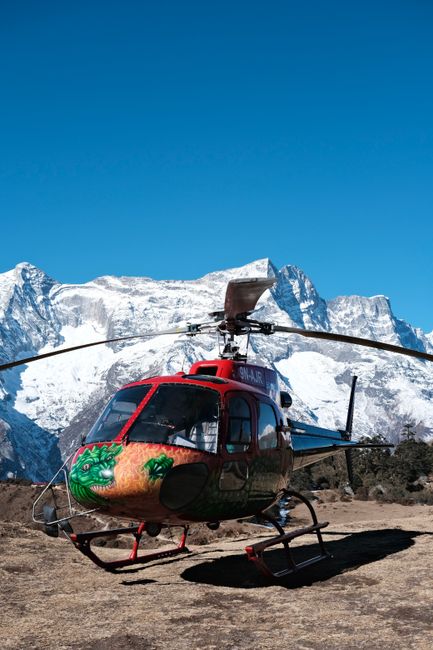
A stunning view means nothing if the operator flying you over it isn’t safe. In the U.S., that means confirming the company holds an active FAA Part 135 air carrier certificate, which requires stricter maintenance schedules and pilot training than the baseline for private aircraft. This is genuinely one of the most overlooked steps in how to choose a helicopter tour destination — travelers spend hours comparing scenery and almost no time checking who’s actually flying the aircraft. The best destinations tend to have mature, well-regulated markets with multiple certified operators rather than a single unregulated outfit running informal flights.
Regulated airspace is actually a good sign, not a red flag. The Grand Canyon is a useful example: after a series of incidents, Congress designated a Special Flight Rules Area with defined corridors and altitude minimums that all commercial operators must follow. Destinations that have gone through this kind of regulatory process generally have safer, more predictable flying conditions than places where anyone with an aircraft can improvise a route — one more reason regulatory maturity belongs on any real checklist for how to choose a helicopter tour destination.
Time Savings Over Ground Travel
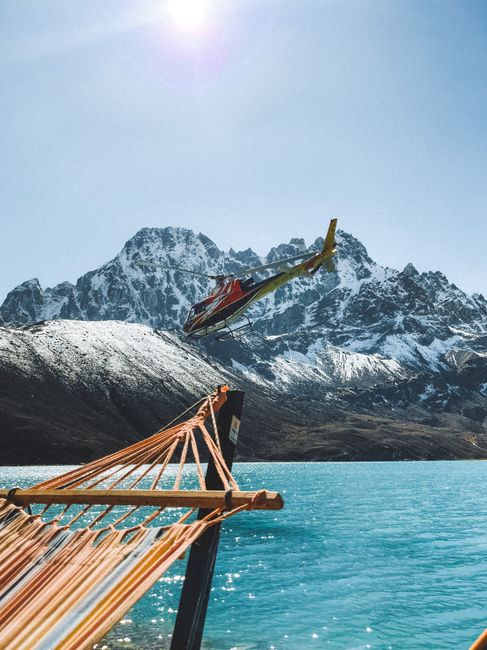
The best destinations also tend to compress an enormous amount of travel time into a short flight. Reaching Everest Base Camp on foot from Lukla takes the better part of two weeks; a helicopter from Kathmandu covers the same distance in under an hour. Kauai’s Napali Coast takes multiple days to see properly on the Kalalau Trail, or twenty minutes by air. That contrast — weeks versus minutes — is part of what makes a flight feel genuinely valuable rather than just a nice-to-have add-on to a trip, and it’s a big part of why these two destinations consistently top lists of the best helicopter tour destinations on Earth.
This factor also explains why so many travelers researching how to choose a helicopter tour destination end up gravitating toward mountainous, remote, or island terrain specifically. Flat, easily-drivable regions rarely offer the same dramatic time-versus-distance tradeoff, even when the scenery itself is nice.
Reliable Weather Windows
Even a spectacular destination is only as good as its flying conditions. Mountain and coastal destinations are especially prone to fog, cloud cover, and sudden wind shifts, which is why the best-run operators build in flexibility for delays and rescheduling rather than flying through marginal conditions. A destination with a well-documented dry season or a predictable pattern of clear mornings — like many tropical and high-altitude locations — tends to produce more consistent, bookable experiences than one where visibility is a coin flip. Some of the best helicopter tour destinations owe as much of their reputation to consistent weather as they do to the scenery itself.
This is worth researching before you travel specifically for a flight. A quick search for the destination’s seasonal weather patterns, combined with recent traveler reviews mentioning cancellations or rescheduling, tells you a lot more about reliability than marketing photos ever will — and it’s the difference between landing a genuinely scenic helicopter tour and spending your one flight window staring at fog.
Seasonality varies enormously by region, and it’s worth learning the specific pattern for wherever you’re headed rather than assuming good weather is a given. Kauai’s trade winds tend to keep the Napali Coast flyable most mornings but can ground afternoon flights during winter storm systems. Nepal’s Himalayan routes are typically clearest in the pre-monsoon spring and post-monsoon autumn windows, with summer visibility often compromised for weeks at a time. The Grand Canyon, by contrast, flies in nearly all conditions short of high wind or thunderstorms, which is part of why it remains such a dependable year-round booking. None of this means you should avoid a destination with a narrower weather window — it just means building an extra day or two of buffer into your itinerary before or after a planned flight, so a single cancellation doesn’t cost you the experience entirely.
Operator Density and Route Variety
Finally, look at how many operators actually serve a destination, and how different their routes are from one another. A single company running one fixed route is a red flag — it usually means low demand, limited competition, or genuine logistical difficulty getting a helicopter business established there. A destination with several competing operators offering different route lengths, price points, and configurations (doors-on, door-off, landing tours) is generally a sign of a mature, well-tested market, and usually a reliable sign you’re looking at one of the genuinely best helicopter tour destinations rather than a niche operation propped up by a single company.
This is exactly the kind of comparison shopping worth doing before you book anywhere. Checking a ranking of the top helicopter tours in the world is a fast way to see which destinations have earned consistent praise across multiple operators rather than a single lucky review. It’s also worth cross-referencing helicopter tour reviews by destination so you’re comparing routes within the same location rather than judging a destination off a single operator’s marketing page. Between the two, you’ll get a much clearer picture of which of the world’s best-rated helicopter tour destinations actually deserves your money versus which ones are coasting on a famous name alone.
Price alone is a poor way to compare operators at the same destination, since a lower fare often means a shorter route, an older aircraft, or a larger group crammed into fewer seats. It’s worth reading reviews that specifically mention seat configuration, flight duration, and how close the pilot actually got to the highlighted landmarks, rather than relying on star ratings alone. Two companies advertising what looks like the same tour can deliver meaningfully different experiences once you compare the fine print. Spending twenty extra minutes cross-referencing a couple of operators before booking is a small price to pay to avoid ending up with the shortest, most crowded version of a flight you may only take once.

Insider Tips from Justin
Hey everyone, Justin here. I’ve flown and reviewed helicopter tours across a long list of destinations at this point, and a few patterns keep coming up whenever I’m deciding whether somewhere is actually worth booking. Here’s what I personally check before recommending a destination to anyone:
- Ask what percentage of the route is actually inaccessible on the ground — If most of the flight passes over things you could also see from a road or overlook, it’s a good flight, not a great one.
- Check how many operators serve the destination — One operator with no competition is a yellow flag worth investigating before you book.
- Read reviews specifically for weather-related cancellations — A destination that reschedules often isn’t necessarily unsafe, but it does mean you should build flexibility into your travel dates.
- Confirm certification before you compare price — A cheaper flight from an uncertified operator is never worth the savings; verify FAA Part 135 (or the local equivalent) first, then compare cost.
- Look for route variety, not just one fixed loop — Destinations offering multiple route lengths and configurations usually indicate a more established, trustworthy market.
- Don’t underrate name recognition — Flying somewhere iconic isn’t shallow; it’s part of why the memory sticks with you for years afterward.
Looking for a Helicopter Tour?
Browse our full directory of helicopter tour reviews by location to find the best experience wherever you’re headed.
Helicopter Tour Destination FAQ’s
Question: What makes a good destination for a helicopter tour?
Answer: Genuine inaccessibility by any other method, visually complex terrain, name-recognizable landmarks, a strong safety record, reliable weather, and a mature market of multiple certified operators.
Question: What are considered the best helicopter tour destinations in the world?
Answer: The Grand Canyon, Kauai’s Napali Coast, Mount Everest and the Himalayas, the Great Barrier Reef, and New Zealand’s glaciers are among the most consistently ranked destinations globally.
Question: Is a scenic helicopter tour worth the cost?
Answer: At a genuinely inaccessible destination, most travelers consider it one of the most memorable things they do on a trip, even at a premium price point.
Question: How do I know if a helicopter tour operator is safe?
Answer: In the U.S., confirm the operator holds an active FAA Part 135 air carrier certificate. Elsewhere, check for the equivalent national aviation authority certification before booking.
Question: Why are some helicopter tour destinations more expensive than others?
Answer: Price generally reflects route length, aircraft type, regulatory costs, and how remote or logistically difficult the destination is to operate flights from.
Question: Do weather conditions affect which destinations are best to fly?
Answer: Yes. Destinations with predictable dry seasons or consistent morning visibility produce far more reliable flights than ones prone to sudden fog or wind.
Question: What’s the difference between a good helicopter tour and a great one?
Answer: Usually route design and pilot experience — a route planned around the most photogenic terrain, flown by a pilot who knows exactly where to slow down or angle the aircraft for the view.
Question: Are regulated airspace areas a bad sign for a destination?
Answer: No — the opposite. Regulated flight corridors, like those at the Grand Canyon, usually indicate a mature destination that has gone through rigorous safety review.
Question: How many operators should a good destination have?
Answer: More than one. Multiple competing operators offering different routes and price points is a strong sign of a well-established, trustworthy market.
Question: Can a remote destination still be a bad helicopter tour if the scenery is flat?
Answer: Yes. Inaccessibility alone isn’t enough — the terrain also needs visual complexity and scale to make for a genuinely memorable flight.
Question: Does time savings matter when choosing a helicopter tour destination?
Answer: It’s a major factor. Destinations where a helicopter turns a multi-day trek into an hour-long flight tend to feel far more valuable than ones offering only a modest time savings.
Question: Should I book with the first operator I find at a destination?
Answer: No. Compare route coverage, certification, and recent reviews across multiple operators before booking, even at well-known destinations.