
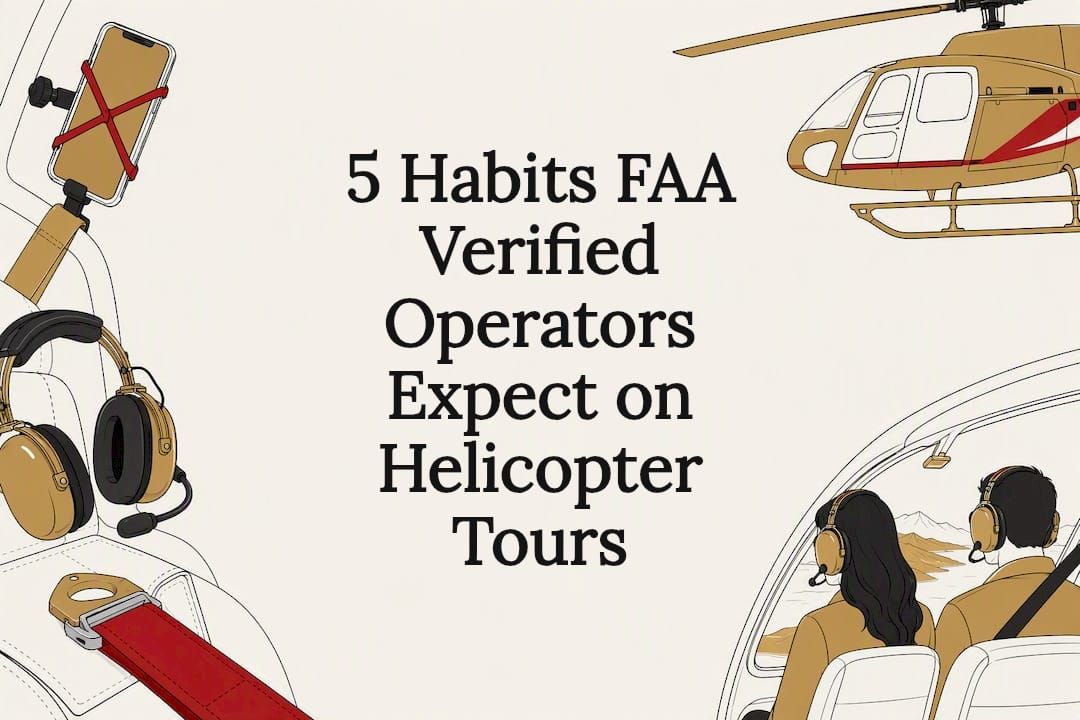

The core of helicopter tour etiquette comes down to five habits: arrive early, dress smart, approach and board only when crew signal you, keep your headset on and your volume down, and stay mindful of the passengers sharing your ride. The recommended operators are verified to be FAA-certified, and following these basics keeps you in sync with the safety standards those operators already run on.
TL;DR:
- Arriving early is crucial to avoid missing your flight or delaying subsequent departures, as helicopter operators run back-to-back schedules.
- Wear fitted, secure clothing and shoes, and remove loose accessories or scarves to prevent them from getting caught in rotor wash or snagging during boarding.
- Approach the helicopter only when signaled by crew, from the front or side within the pilot’s line of sight, and crouch near the rotor arc for safety.
- Keep headsets on during the flight to protect hearing and communicate clearly, and speak quietly during narration to avoid disrupting other passengers.
- On shared tours, rotate window seats courteously, keep conversations brief, and be mindful of space and fellow passengers to enhance safety and comfort.
Table of Contents
- What Should You Do Before a Helicopter Tour?
- How Do You Board and Exit a Helicopter Safely?
- How Should You Behave During the Flight?
- Do Manners Change Between Shared and Private Tours?
- What Should You Ask Before You Fly?
- Why Following the Pilot’s Instructions Isn’t Optional
- What About Phones, Smartwatches, and Other Devices?
- How Do You Keep the Cabin Comfortable for Everyone?
- The Real Reason Etiquette and Safety Are the Same Thing
- Book With Confidence Through Verified Operators
- Quick Links for Trip Preparation
- FAQ
What Should You Do Before a Helicopter Tour?
Show up well before departure to allow enough time for check-in and preparations. Most operators build in time for check-in, weigh-ins, and a passenger briefing, and arriving early respects the crew’s tight schedule since helicopters typically run back-to-back flights all day. Show up late and you risk bumping the next group, or losing your slot entirely.
What you wear matters more than most first-timers expect. Skip loose scarves, floppy hats, and anything with dangling straps. Rotor wash is strong enough to send a sun hat spinning into the blades, and loose fabric can snag on seatbelts or door handles during boarding.
- Wear close-fitting layers and shoes that stay on your feet, not sandals or flip-flops
- Skip dangling jewelry, scarves, and wide-brim hats unless they have a chin strap
- Loop your camera strap around your neck or wrist before you get near the aircraft
- Bring only a small bag; most operators enforce strict weight limits for cabin items
Tipping isn’t required, but pilots and ground crew appreciate it when the flight goes smoothly and the commentary added real value. It is common to tip a modest amount per passenger on shared tours, with more appreciated on private charters. Cash is easiest since not every operator processes tips through card readers.
Bring your ID and any prepaid booking confirmation, and check the operator’s weight and baggage policy in advance. Weight and balance calculations affect seating on smaller aircraft, so an unreported bag or an unexpected passenger weight can force a last-minute reshuffle. Full guidance on what to wear and what to pack is worth reviewing before you fly.
Pro Tip: Weigh your bag at home before you leave for the airport. Operators calculate weight and balance precisely, and a surprise 15-pound camera bag can mean a reassigned seat.
How Do You Board and Exit a Helicopter Safely?
Boarding etiquette isn’t just politeness. It’s the moment where good manners and hard safety rules overlap completely. Every approach path matters because a spinning tail rotor is nearly invisible and deadly if you walk into it.
- Wait for a crew member’s signal before you move toward the aircraft. Never approach on your own.
- Approach from the front or side, always within the pilot’s direct line of sight. Never walk toward the tail.
- Crouch slightly as you get close to the rotor arc, keep both hands low, and hold your bag against your body.
- If wind or rotor wash sends a hat or scrap of paper flying, let it go. Chasing loose items near a running helicopter is one of the most common causes of ground injuries at tour operators.
- Once you’re clear of the aircraft after landing, keep walking away from the rotor disc rather than lingering nearby for photos.
Ground crews at FAA-certified operations brief every group on this exact sequence before departure, and the pattern rarely varies between operators. Passengers who wait for the signal and move with a low profile aren’t just following instructions. They’re doing the one thing that keeps loading times short and everybody safe, since a single hesitant or confused passenger can delay an entire flight rotation.
How Should You Behave During the Flight?
Headsets aren’t a comfort item. They’re required gear that protects your hearing from turbine and rotor noise that can hit 100 decibels or more inside the cabin, and they’re how the pilot communicates safety instructions and narration clearly over that noise. Put yours on as soon as the crew hands it to you, adjust the mic boom close to your mouth if you’ll be talking, and hand it back gently when the flight ends rather than tossing it on the seat.
Once you’re airborne, keep your voice down during guided commentary. Pilots are often narrating landmarks over the same channel everyone’s headset is tuned to, so cross-talk drowns out information other passengers paid to hear. Save questions for a natural pause, and keep them short.
- Skip the flash when photographing through the window; it reflects off the glass and does nothing useful
- Rotate window turns if you’re near the middle seat so everyone gets a clear shot
- Keep phones and cameras on wrist straps so nothing slips from your hands during a bank or turn
- Avoid strong perfume or cologne; cabin space is tight and scents circulate fast
Morning flights tend to bring calmer air and cooler cabin temperatures, which affects both comfort and how passengers negotiate window turns since everyone wants the same golden-hour shot. If you feel queasy, say so quietly to the crew rather than pushing through it. Motion sickness bags are standard equipment on most tours, and pilots would rather know early than deal with a bigger problem mid-flight.
Pro Tip: If you’re prone to motion sickness, ask for a window seat near the front. Forward-facing views with a stable horizon reduce the sensory mismatch that triggers most airsickness.
Do Manners Change Between Shared and Private Tours?
Yes, and the difference is mostly about space and pacing. On a shared helicopter tour, you’re one of several strangers split across limited window seats, so etiquette leans toward turn-taking and restraint.
- Rotate window access instead of camping in the best seat for the entire flight
- Keep group conversation brief; other passengers came for the scenery, not your itinerary
- Store bags under your seat or between your feet, never in the aisle or on a neighbor’s lap
Private charters flip that dynamic. You’re not sharing space, but the pilot’s briefing and instructions still carry the same weight, and a quiet thank-you to the crew after landing goes further than it would in a group setting. Seating order on both formats is rarely random. Operators load passengers by weight distribution to keep the aircraft balanced, so don’t take a seat assignment personally.
What Should You Ask Before You Fly?
A few quick questions at check-in show you’re paying attention without slowing anyone down.
- Ask about weight limits and camera gear policy before you’re standing at the aircraft door
- Confirm whether weather conditions might shift departure time or flight duration
- Ask the crew directly if you’re unsure where to stand or when to approach
After landing, a simple thank-you to the pilot and ground crew is the closest thing helicopter touring has to a universal courtesy. If you need help with motion sickness or mobility, mention it quietly at check-in rather than mid-flight. Crews handle these requests constantly and would rather plan ahead than improvise in the air.
Why Following the Pilot’s Instructions Isn’t Optional
Every instruction a pilot gives during a tour, from seatbelt checks to “stay seated until I signal,” comes from a communication protocol built around one goal: keeping the flight predictable. Helicopters don’t have the margin for error that a car or a boat does, and a pilot’s attention is split between flying, monitoring instruments, and managing the cabin.
That’s why the best passengers treat instructions as final, not as suggestions open to negotiation. If a pilot says to keep your seatbelt on during a scenic hover, that’s not caution for caution’s sake. It’s usually tied to wind conditions or aircraft positioning you can’t see from your seat.
Communication during the flight typically runs through the shared headset channel, which means the pilot can address the whole cabin at once instead of repeating instructions passenger by passenger. Respond with a nod or a quick verbal acknowledgment if asked, and resist the urge to ask unrelated questions mid-maneuver. Save those for the calmer stretches of the route when the pilot has bandwidth to answer.
Operators reviewed and verified through a thorough safety review process consistently run structured briefings before takeoff precisely because clear instructions reduce confusion in the air. A passenger who listens closely on the ground tends to respond faster and calmer once airborne.
What About Phones, Smartwatches, and Other Devices?
Cameras get most of the etiquette attention, but phones, smartwatches, and tablets need the same care. Turn phones to airplane mode or silent before boarding; a ringtone through a shared headset channel is jarring for everyone on board, including the pilot.
Smartwatches with haptic buzzing are usually fine, but avoid checking notifications constantly during the flight. It pulls your attention from the scenery other passengers are also trying to enjoy, and on a shared tour it can come across as disengaged or rude.
If you’re recording video for social media, keep the device secured on a strap or firmly gripped. Cabins vibrate more than people expect, and a dropped phone during a bank turn is both a safety hazard and an awkward moment for the flight. Skip video calls entirely. Bandwidth in the air is inconsistent, and the audio feedback through a headset mic is disruptive to the whole cabin.
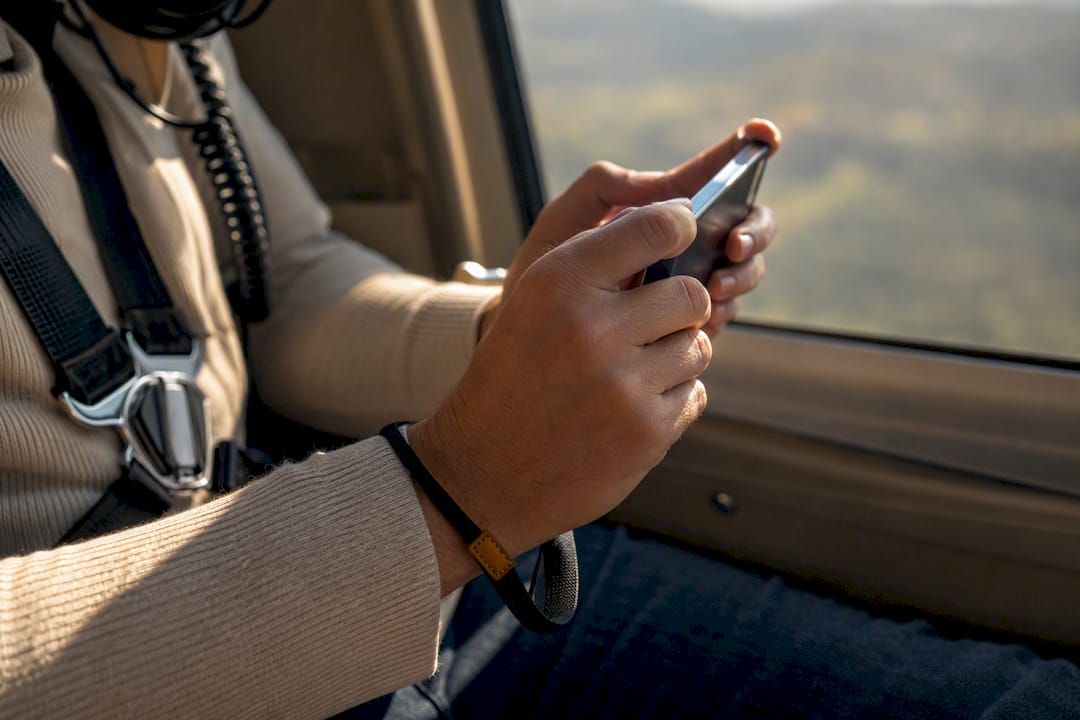
Some operators restrict device use during specific phases of flight, particularly takeoff and landing, similar to commercial airline rules. If you’re unsure, ask at check-in rather than assuming the same rules apply across every tour company.
How Do You Keep the Cabin Comfortable for Everyone?
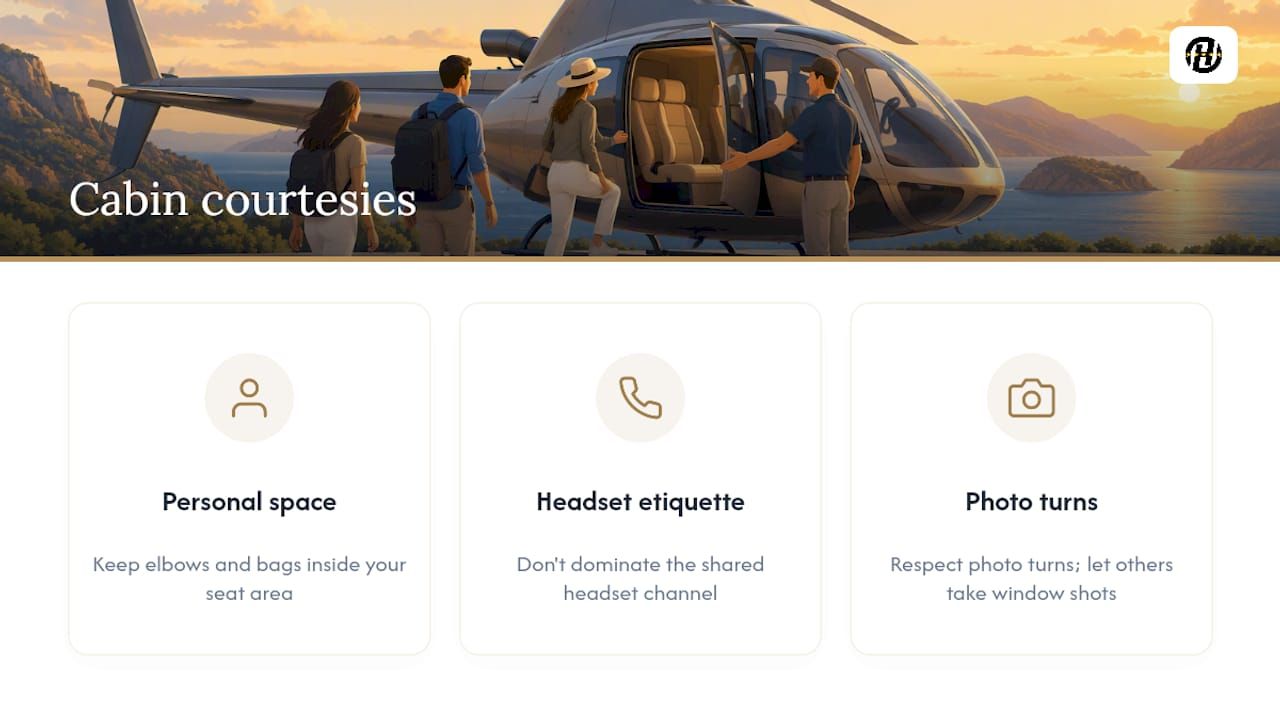
A helicopter cabin tour typically lasts a few dozen minutes, making small habits especially noticeable in the shared space. Keep elbows and bags within your own seat area, and be conscious of window-seat envy. It’s the single most common friction point on shared tours.
Light conversation is fine between commentary breaks, but avoid dominating the shared headset channel with side chat. Other passengers are often trying to listen to the pilot’s narration, and crosstalk makes that harder for everyone. If a fellow passenger seems anxious or unwell, a quiet check-in or simply giving them space goes a long way; you don’t need to fix it, just don’t add pressure.
Respect photo turns without being asked twice. If someone’s clearly angling for the window shot on a scenic pass, let them have that moment and trust you’ll get yours on the next leg. Small courtesies like these are what separate a tour that feels cramped from one that feels like a shared adventure.
The Real Reason Etiquette and Safety Are the Same Thing
People treat etiquette and safety as separate topics, but on a helicopter tour they’re the same behavior viewed from two angles. Arriving on time isn’t just polite. It keeps a tightly scheduled rotation of flights running, and every operator that Helicopterstour.com verifies as FAA-certified builds its ground operations around exactly that kind of predictability.
The passengers who get the most out of a tour aren’t the boldest or the most photo-obsessed. They’re the ones who listen closely during the briefing and move calmly on the ground. Crews notice, and it shows in the traveler feedback Helicopterstour.com collects across its reviewed operators.
— Justin
Book With Confidence Through Verified Operators
You don’t have to guess which operator takes safety seriously and which one just says it does. Helicopterstour.com independently verifies that every recommended operator is FAA-certified, and each listing includes operator-specific prep notes covering boarding procedures, weight limits, and what to expect at check-in, so you walk in already knowing the etiquette that particular crew expects.

Browse verified helicopter tours by destination, or if you’re torn between a group flight and something more private, the guide on private versus shared tours breaks down which format fits your group size and comfort level. Once you’ve picked a destination, check availability and lock in your flight time directly through the operator listing.
Quick Links for Trip Preparation
- What to wear on a helicopter tour: clothing and camera tips
- Helicopter tour safety: what protocols to expect
- General trip preparation advice: packing light for guided tours
FAQ
How Much Should You Tip on a Helicopter Tour?
Tipping isn’t required, but pilots and ground crew appreciate it when the flight goes smoothly and the commentary added real value. It is common to tip a modest amount per passenger on shared tours, with more appreciated on private charters. Cash is easiest since not every operator processes tips through card readers.
How Should You Dress for a Helicopter Tour?
Wear fitted layers, closed-toe shoes, and skip loose scarves, wide-brim hats without a chin strap, and dangling jewelry. Secure your camera strap around your neck or wrist before boarding, and bring only a small bag since weight limits are strict.
Why Do You Have to Wear Headphones on a Helicopter?
Headsets protect your hearing from turbine and rotor noise, which can be loud enough to cause discomfort over a full flight. They also carry the pilot’s narration and safety instructions clearly, since normal conversation is nearly impossible over the engine noise.
Is Morning or Afternoon Better for a Helicopter Tour?
Morning flights typically bring calmer air and cooler cabin temperatures, which many passengers find more comfortable, while sunset flights offer dramatic lighting for photos. Both options are covered in Helicopterstour, including how time of day affects window-seat demand.
What Happens if I Arrive Late for My Helicopter Tour?
Most operators run tight, back-to-back schedules, so arriving late can mean losing your seat or delaying the next group’s flight. It is best to show up well before departure to allow enough time for check-in, weigh-ins, and the pre-flight safety briefing without rushing.
Recommended
- Best Helicopter Tours for First-Time Flyers: What to Expect and How to Prepare
- What to Wear on a Helicopter Tour: Clothing, Camera, Comfort Tips
- Helicopter Tour Safety: Are Helicopter Tours safe?