

For point-to-point reliability, book a helicopter. It shrugs off choppy water and needs only a pad and clear air. For a scenic, doorstep-to-water experience, book a seaplane, but accept it depends on calm harbor conditions. The real tradeoff is flexibility and schedule reliability versus a slower, more memorable ride tied to water.
TL;DR:
- Helicopter tours are generally more reliable in poor weather conditions because they are less affected by water turbulence or harbor traffic.
- Seaplanes often carry more passengers and can operate over longer distances, but they depend heavily on calm water and tide schedules, which may lead to cancellations.
- Budget-wise, helicopter seats typically cost more than seaplane seats for similar routes, while private charters cost significantly more than shared options on either aircraft.
- Expect helicopter rides to be noisier and more compact, while seaplanes usually have a more spacious, quieter cabin with slower, more relaxed sightseeing.
- Booking flexibility favors helicopters in peak seasons due to more frequent departures, but seaplanes require planning around weather-tolerant windows and water conditions.
Table of Contents
- Helicopter vs Seaplane: Comparing the Decision Factors
- Which Is Actually Safer: Helicopter or Seaplane?
- How Weather and Water Conditions Affect Reliability
- What Does a Helicopter or Seaplane Trip Actually Cost?
- What Does It Actually Feel Like to Fly Each One?
- How to Choose Between a Helicopter and a Seaplane
- How Helicopterstour Helps You Book With Confidence
- Why Maintenance Schedules Quietly Decide Availability
- How Far Ahead Should You Book Each One?
- A Straight Answer on Which One to Book
- Book a Helicopter Tour With Verified Safety Standards
- Sources
- FAQ
Helicopter vs Seaplane: Comparing the Decision Factors
Every traveler weighing helicopter vs seaplane is really weighing seven things at once. Here’s how they typically stack up against each other:
- Safety: Both have strong records under FAA oversight; helicopters carry rotor hazards on the ground, seaplanes carry water-ditching risk in flight.
- Weather tolerance: Helicopters usually win. They need ceiling and visibility, not calm water.
- Landing flexibility: Seaplanes need a suitable harbor or lake; helicopters need a pad, which is often easier to find near cities.
- Cost: Comparable per-seat pricing in many markets, though helicopter fares often run higher depending on route and operator.
- Capacity: Seaplanes often carry more passengers and gear per trip; helicopters are typically tighter but faster to load.
- Speed: Similar block times on short hops, though ground logistics often decide the real winner.
- Comfort: Seaplanes tend to feel roomier and quieter at cruise; helicopters climb faster but run louder in the cabin.
Door-to-door time usually favors whichever aircraft lands closer to your actual destination, not whichever one is faster in the air.
Which Is Actually Safer: Helicopter or Seaplane?
Safety in this comparison comes down less to the aircraft type and more to what happens in the seconds before and after flight. Helicopters carry a specific hazard profile tied to the rotor disc. The FAA Helicopter Flying Handbook explains that pilots train extensively in autorotation, the maneuver that lets a helicopter descend safely and land even after total engine power loss. Ground hazards matter more day to day: FAA passenger guidance stresses approaching from the front in a low crouch, never from the rear near the tail rotor, and keeping any carried items below waist height.
Seaplanes face different risks tied to water. Hull and float integrity, wave height, and swell direction all factor into whether a landing is advisable. Ditching preparedness, meaning briefed procedures and onboard flotation equipment, is standard for over-water operations.
A strong operator safety briefing covers both. FAA guidance on passenger procedures treats crew training and standardized briefings as the biggest lever operators control, arguably a bigger factor in outcomes than the aircraft type itself. Before boarding either aircraft, expect the crew to cover:
- Approach and departure paths, including where not to walk
- Seatbelt, headset, and door operation
- Emergency exits and flotation gear location
- What to do if the pilot calls an abort
How Weather and Water Conditions Affect Reliability
Ceiling and visibility govern helicopter operations. A helicopter can usually fly in conditions that would ground a fixed-wing aircraft, but low cloud or dense fog will still cancel a tour. Seaplanes answer to a second master: the water itself. Chop, tide, and harbor traffic can scrub a flight even under a clear sky.
That distinction shows up in cancellation patterns. Harbor state, not the sky, drives most seaplane cancellations, while a helicopter tolerates marginal water conditions completely since it never touches the surface.
Range and capacity differ too. Seaplanes often carry more passengers over longer legs, since they aren’t limited by pad size. Helicopters trade some of that range for the ability to land almost anywhere flat and clear.
- Helicopters: constrained by ceiling, visibility, and pad availability
- Seaplanes: constrained by wave height, tide windows, and harbor traffic
- Diversions: helicopters usually reroute to another pad; seaplanes often wait out a tide or calm window instead
What Does a Helicopter or Seaplane Trip Actually Cost?
Pricing shapes differ more than the headline numbers suggest. By-the-seat tours on both aircraft often land in similar broad bands, though helicopter seats frequently price higher than seaplane seats on comparable routes. Whole-aircraft charters run substantially more for either option, but they buy you control over timing and companions. If you’re deciding between a shared seat and a private charter, it’s worth comparing private versus shared helicopter tours before you book.
- Harbor arrivals (seaplane) can cut last-mile transfer time if your destination sits on the water, making a step by step luxury yacht tour planning guide a helpful resource when coordinating harbor landings and transfer logistics
- Pad arrivals (helicopter) tend to land you closer to a road, which suits inland hotels
- Baggage limits are usually tighter on helicopters; seaplanes often accommodate bulkier gear
- Passenger size and headroom differences matter more in helicopters, where cabins run smaller
What Does It Actually Feel Like to Fly Each One?
A seaplane ride starts and ends with a distinct sensation: the hull skimming water before it lifts free, and a similar bump on return. Cruise altitude tends to run lower, which keeps the scenery close, and cabins are often roomier and quieter than a helicopter’s. A helicopter climbs almost immediately after liftoff, delivers a different, more clinical kind of view, and runs noisier in the cabin, which is why crews issue headsets as standard equipment.
- Seaplanes: lower, slower, more relaxed sightseeing pace
- Helicopters: faster climbs, sharper sightlines, headset communication throughout
- Window seats matter more on helicopters; sightlines shift fast
- Loose scarves and hats are a liability near rotor wash; pack them away before boarding
Pro Tip: Shoot through an open window rather than glass whenever the operator allows it. Reflections and scratches ruin more helicopter tour photos than bad weather does.
How to Choose Between a Helicopter and a Seaplane
Work through this before you call an operator:
- Define your mission. Is this transportation you can’t miss, or is the ride the whole point?
- Check how close each aircraft actually lands to your final destination.
- Build in a weather cushion, especially if you’re on a tight connection.
- Confirm passenger weight limits and baggage allowances against your group.
- Ask directly about safety equipment and pilot experience level.
Once you’re on the phone, push past the marketing pitch. Ask about sea-state limits for seaplane operators, cancellation and rebooking policy, and what flotation or survival gear rides along on over-water routes. A good rundown of what to expect on the day itself, from check-in through landing, can help you spot when an answer sounds rehearsed rather than real, which is exactly what a proper pre-flight walkthrough should cover.
Watch for red flags: vague answers about safety procedures, no clear reference to FAA operating standards, or reluctance to confirm insurance coverage. Any operator worth booking answers these questions without hesitation.
How Helicopterstour Helps You Book With Confidence
The site independently verifies that recommended operators hold aviation certification or an equivalent license, and it pairs that vetting with traveler review data rather than marketing copy alone. That combination matters most in a category where safety culture, not brand name, decides outcomes.
Before booking any helicopter option, use the site to:
- Confirm the operator’s certification status ahead of time
- Read aggregated traveler reviews instead of relying on a single testimonial
- Compare tour options across 15+ countries before committing to one route
- Cross-check safety expectations against what a reputable operator’s briefing should include
Why Maintenance Schedules Quietly Decide Availability
Aircraft downtime, not passenger demand, is often the real reason a tour gets rescheduled. Helicopters run on tight maintenance intervals tied to flight hours and component life, which keeps fleets reliable but also mean a single aircraft can be pulled from service with little warning. Seaplanes carry the added burden of hull and float inspections, since saltwater exposure accelerates corrosion in ways a land-based aircraft never experiences.
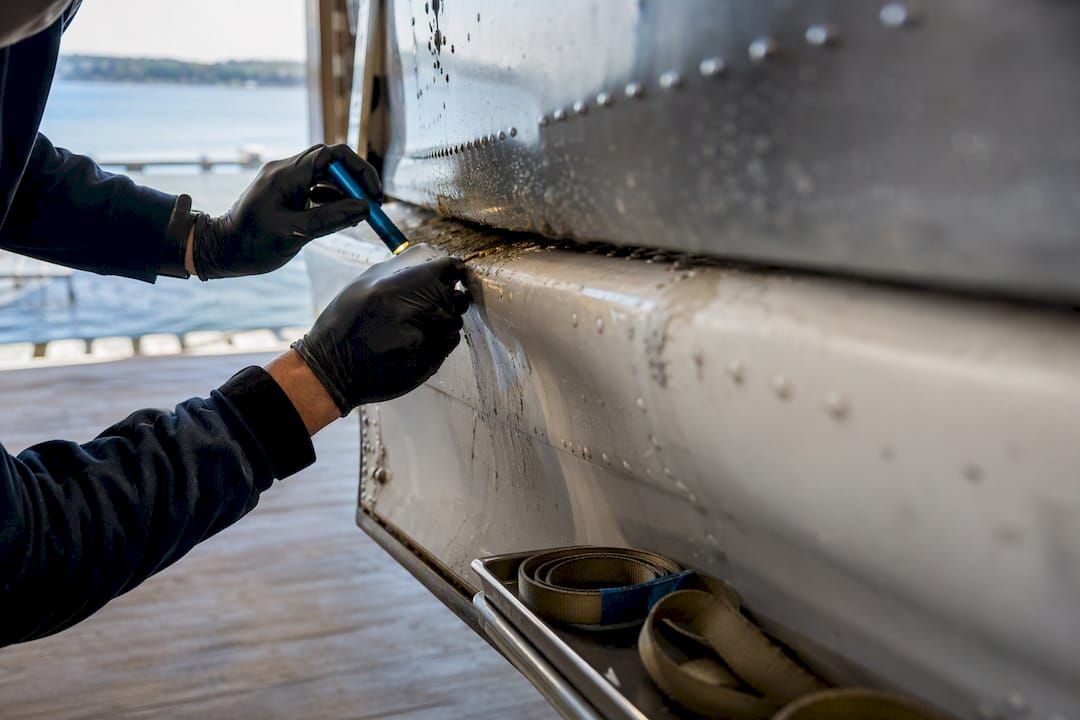
Operators with larger fleets absorb this better. If one helicopter or seaplane goes down for scheduled maintenance, a multi-aircraft operator can usually substitute another unit without canceling your booking. Smaller, single-aircraft operations don’t have that cushion, and a maintenance delay there often means a canceled or rescheduled flight instead of a swap.
This is where the study on helicopter versus seaplane tourist demand becomes relevant beyond market share. Helicopters capture more of the tourist market partly because their maintenance and operational independence from water infrastructure make them easier to keep flying consistently. Seaplanes require dock access, water-quality checks, and tide-dependent scheduling on top of standard airframe upkeep, which adds more variables that can ground a flight.
Ask any operator, of either aircraft type, how many aircraft they operate and what their substitution policy looks like when one goes down for service. That single question tells you more about your odds of actually flying on the day you booked than almost anything else.
How Far Ahead Should You Book Each One?
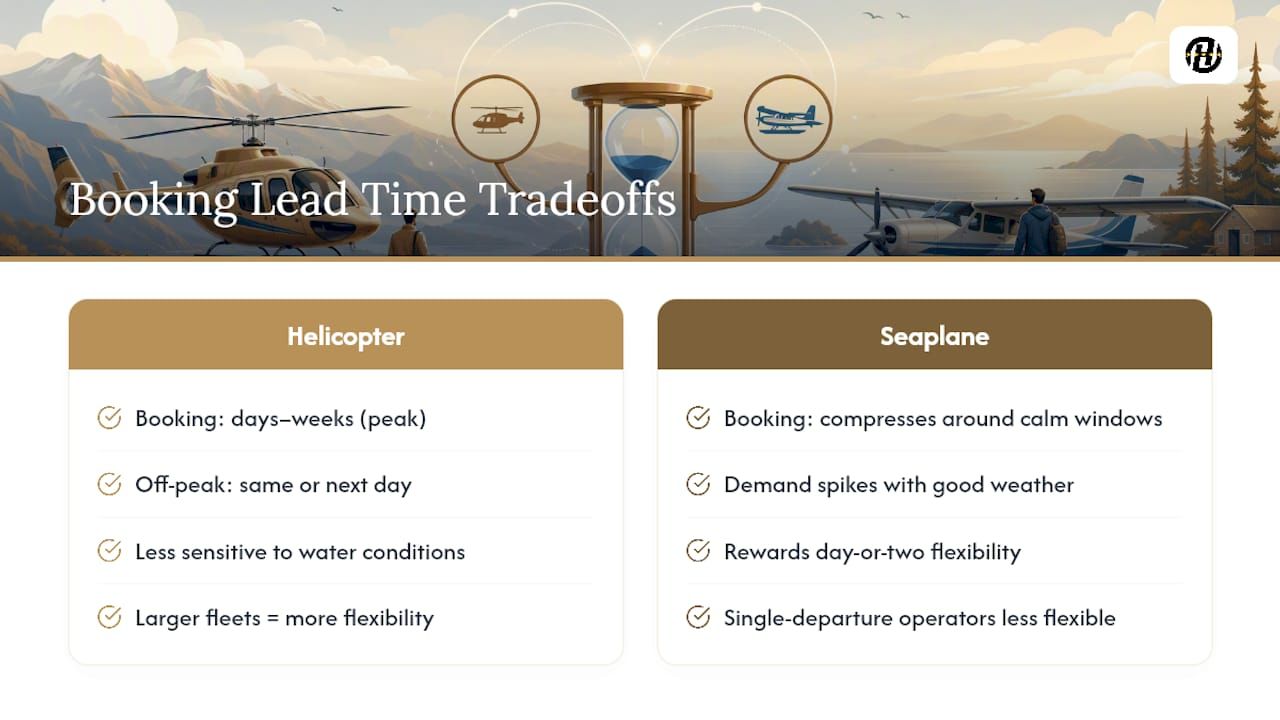
Booking windows differ based on how each aircraft’s constraints ripple through scheduling. Helicopter tours in popular destinations often book up days or weeks ahead during peak season, but same-day or next-day availability is common outside those windows because ceiling and visibility requirements are less restrictive than water conditions.
Seaplane availability tends to compress around good-weather windows. When a stretch of calm water and clear skies arrives, demand spikes immediately, and operators can sell out fast. That means seaplane bookings often reward flexibility more than helicopter bookings do. If you can shift your trip by a day or two to chase good harbor conditions, you’ll have a much easier time getting a seat.
Both aircraft types see more flexible booking policies from operators that run larger fleets and multiple daily departures. A single-departure operator, whether flying helicopters or seaplanes, has far less room to rebook you if something changes. When you’re comparing available tours across regions, pay attention to how many daily departures an operator runs, not just the price per seat. More departures generally means more room to adjust if weather or maintenance disrupts your original slot.
A Straight Answer on Which One to Book
If your schedule can’t slip, book the helicopter every time. If a harbor landing saves real ground time, or the flight itself is the destination, choose the seaplane and build in a weather buffer. Whichever you pick, confirm the safety briefing and the operator’s credentials before you hand over payment.
— Justin
Book a Helicopter Tour With Verified Safety Standards
Choosing between a helicopter and a seaplane often comes down to trust in the operator, not just the aircraft. Helicopterstour.com solves that specific problem for helicopter travel: every recommended operator is checked for aviation certification, and every listing is weighed against multiple traveler reviews rather than a single testimonial.

That verification work means you can skip the guesswork of cold-calling operators to ask about certifications and safety records. Browse helicopter tours, yacht charters, and expeditions across 15+ countries and compare operators side by side before you commit. If you’re weighing a shared flight against a private charter, the guide to private versus shared helicopter tours will help you match the booking type to your budget and group size. Start your search today and lock in a verified operator before peak-season availability tightens up.
Sources
- Helicopter flying handbook — Chapter 1 (FAA)
- Faasafety
- A comparative analysis between helicopter and seaplane for passenger transport
- Seaplane vs. helicopter to the Hamptons — practical comparison
FAQ
Which Is Safer, a Helicopter or a Seaplane?
Neither aircraft type has a clear safety edge on paper; outcomes depend more on operator training and adherence to FAA safety procedures than on the airframe itself. Helicopters carry ground-level rotor risks, while seaplanes carry water-related risks tied to ditching and hull integrity, so ask each operator about their specific safety record and briefing process.
Why Don’t We Use Seaplanes as Often Anymore?
Seaplanes remain in active use on many coastal and lake routes, but their dependence on calm water, tide windows, and dock infrastructure limits where and when they can operate compared to helicopters. That operational rigidity is a major reason helicopters capture more of the tourist transport market in many regions today.
Is Flying a Helicopter Harder Than Flying an Airplane?
Helicopter flying demands different skills than fixed-wing flying, particularly around hovering and autorotation, a maneuver detailed in the FAA Helicopter Flying Handbook. It isn’t accurate to call one universally harder than the other; each aircraft type requires its own specialized training and certification.
Can a Helicopter Fly Over an Ocean?
Yes, helicopters can fly over open water, though range, fuel reserves, and emergency flotation equipment become bigger factors on longer over-water legs. Most scenic tour routes stay close enough to shore that this isn’t a practical concern, but always ask an operator about their over-water safety equipment if your route includes extended open water.
How Much Does a Helicopter Tour Cost Compared to a Seaplane?
Pricing varies by route, operator, and whether you book a shared seat or a private charter, so current rates are best confirmed directly through Helicopterstour for the specific tour you’re considering. In general, by-the-seat helicopter fares often run higher than comparable seaplane fares, while private charters on either aircraft cost substantially more than shared bookings.
Recommended
- Are Helicopter Tours Worth It? 5 Expert Insights on Costs and Experiences
- Helicopter Tour Safety: Are Helicopter Tours safe?